

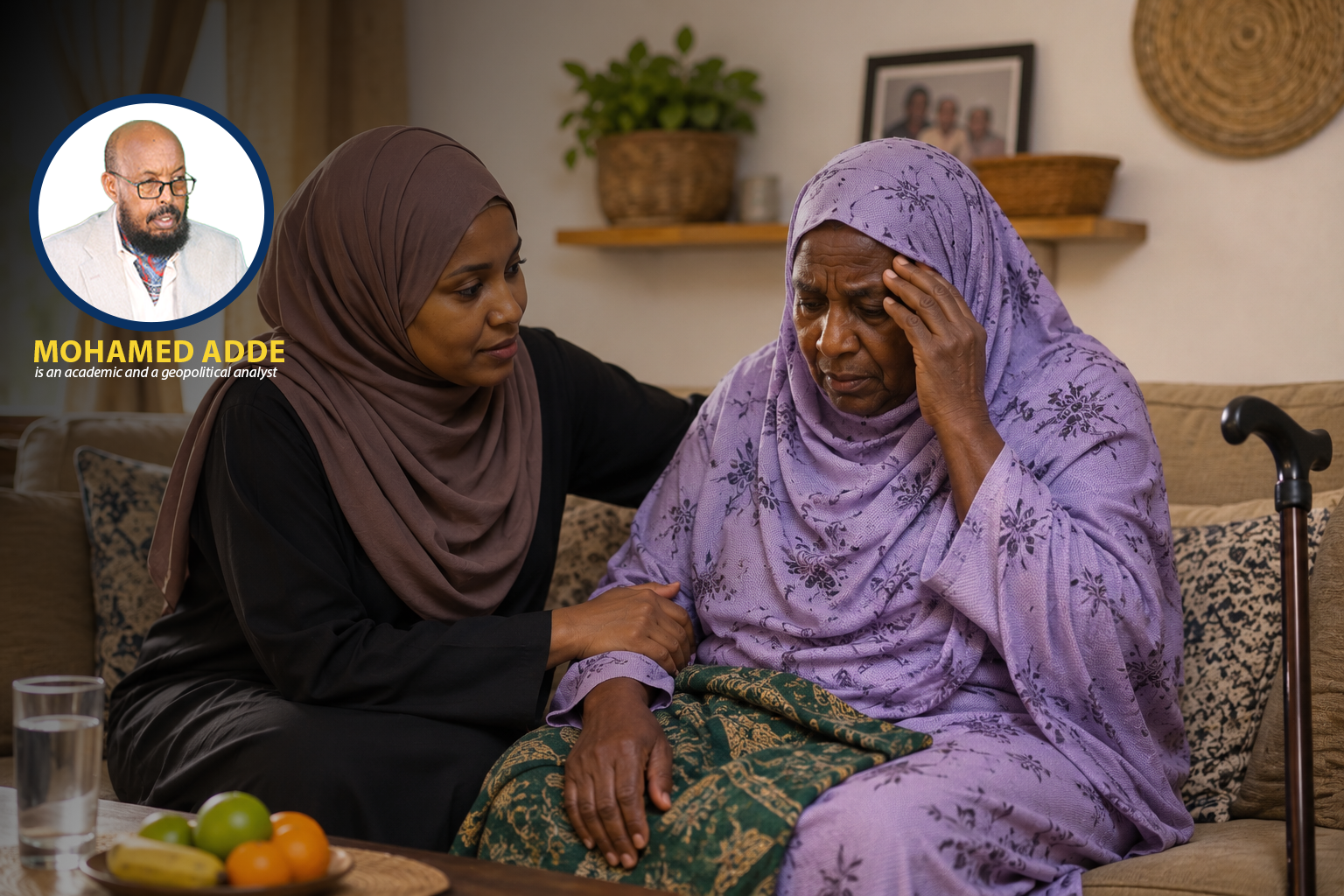

For many years, Somalia’s healthcare priorities have focused on infectious diseases, maternal and child health, malnutrition, and conflict-related injuries. Yet another health challenge is quietly emerging as more Somalis live longer lives: Alzheimer’s disease. Although it receives little public attention, doctors are increasingly encountering older patients who struggle with memory loss, confusion, and changes in behaviour. What many families dismiss as “old age” may, in fact, be the early stages of Alzheimer’s disease.
Alzheimer’s disease is the most common cause of dementia, a condition that gradually destroys memory, thinking, and the ability to carry out everyday tasks. It is a progressive neurodegenerative disorder, meaning that brain cells slowly deteriorate over time. Unlike ordinary forgetfulness, Alzheimer’s steadily worsens, eventually affecting a person’s independence, relationships, and quality of life.
Worldwide, more than 55 million people are living with dementia, and Alzheimer’s accounts for approximately two-thirds of these cases. As populations age across Africa, experts expect the number of people affected to rise significantly over the coming decades. Somalia is no exception. Improvements in healthcare, nutrition, and living conditions mean that more people are reaching older age, making age-related diseases increasingly common.
The earliest signs of Alzheimer’s are often subtle. A person may repeatedly forget recent conversations, misplace familiar objects, or ask the same questions several times. They may struggle to remember appointments, lose track of time, or become confused in places they once knew well. Family members may first notice changes in personality, mood, or decision-making before recognising memory problems. Because these symptoms develop gradually, they are frequently mistaken for normal ageing.
As the disease progresses, the effects become more severe. People with Alzheimer’s may no longer recognise close relatives, become unable to manage finances or medication, forget how to prepare meals, or require assistance with dressing, bathing, and eating. In the advanced stages, patients often need round-the-clock care.
Several factors contribute to the growing burden of Alzheimer’s disease. Age remains the greatest risk factor, but it is not the only one. High blood pressure, diabetes, obesity, smoking, high cholesterol, physical inactivity, hearing loss, depression, and poor cardiovascular health all increase the risk of developing dementia later in life. These conditions are becoming more common in Somalia as lifestyles and diets change.
One of the greatest challenges is that there is currently no cure for Alzheimer’s disease. However, early diagnosis can make a meaningful difference. Available treatments may temporarily reduce symptoms for some patients, while timely medical advice allows families to plan care, improve home safety, and manage other health conditions that may worsen memory problems.
Equally important is prevention. Although Alzheimer’s cannot always be prevented, scientific research shows that maintaining a healthy lifestyle can reduce the risk or delay its onset. Regular physical activity, a balanced diet rich in vegetables, fruits, fish, and whole grains, controlling blood pressure and diabetes, avoiding tobacco, remaining socially connected, getting adequate sleep, and keeping the mind active through reading, learning, and conversation all contribute to better brain health.
For Somali families, caring for someone with Alzheimer’s can be emotionally and financially demanding. Since specialised nursing homes and memory-care services are scarce, most caregiving falls on relatives. This responsibility often requires patience, understanding, and significant personal sacrifice. Caregivers also need emotional support, as long-term caregiving can lead to stress and exhaustion.
Public awareness is therefore essential. Many people still believe that severe memory loss is simply a normal part of ageing. Others may attribute unusual behaviour to supernatural causes or mental illness. Better education can help families recognise the warning signs earlier and encourage them to seek medical assessment instead of delaying care.
Healthcare providers also have an important role. Training primary healthcare workers to identify dementia symptoms, educating communities about healthy ageing, and integrating dementia screening into routine care for older adults would strengthen Somalia’s response. Universities, medical institutions, and public health organisations can further support research to better understand the extent of Alzheimer’s disease in the country.
As Somalia continues to develop and life expectancy increases, diseases associated with ageing will become more visible. Alzheimer’s disease is not merely a personal or family issue; it is an emerging public health challenge that deserves greater attention. By investing in awareness, prevention, early diagnosis, and caregiver support today, Somalia can better prepare for the needs of its ageing population tomorrow.
Growing older should not mean facing memory loss alone. With knowledge, compassion, and stronger health services, families can help people living with Alzheimer’s maintain dignity, independence, and the highest possible quality of life for as long as possible.
Mohamed Mohamoud Adde is an academic and a geopolitical analyst