

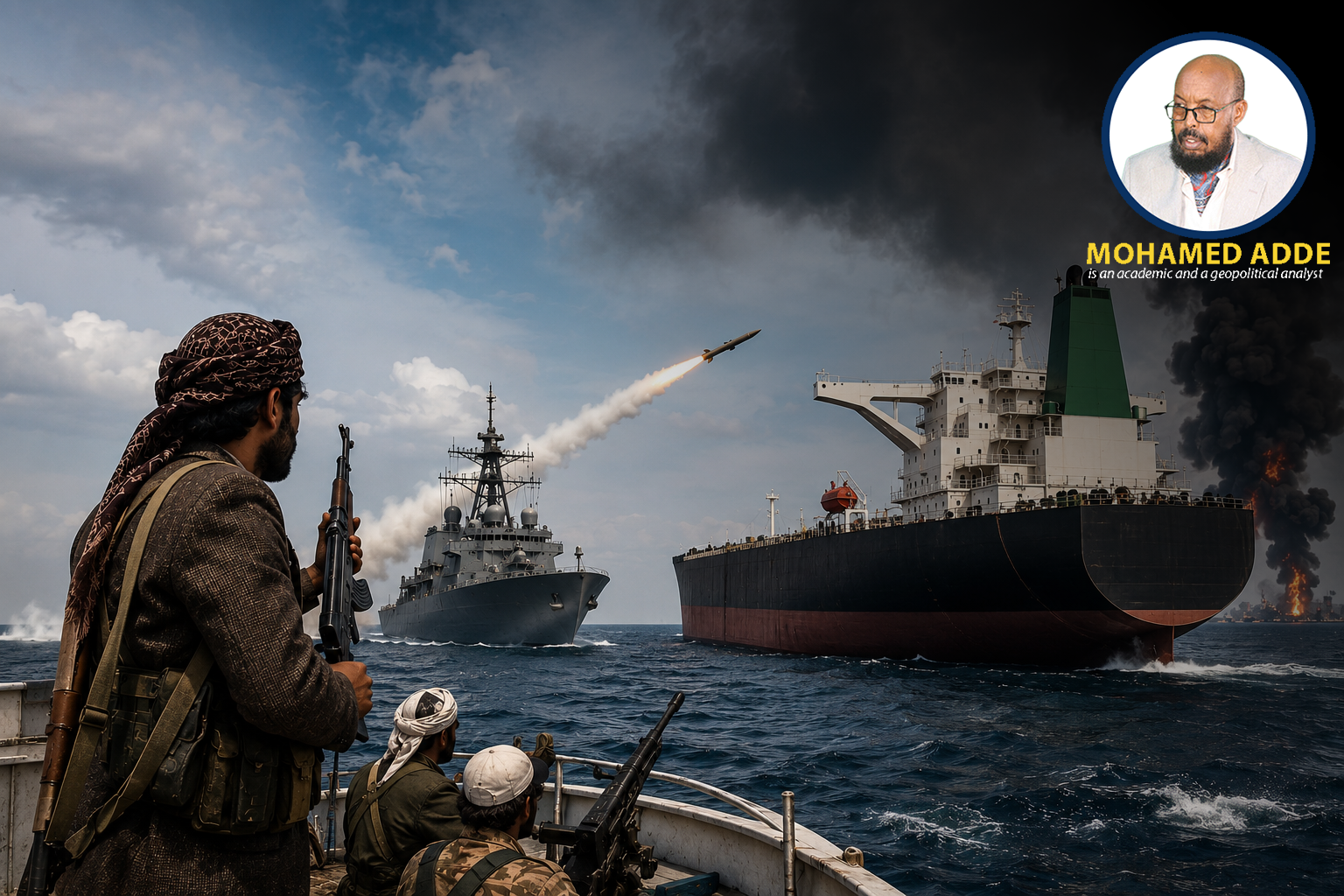

The conflict engulfing the Middle East has entered a dangerous new phase after Yemen’s Iran-aligned Houthi movement announced what it describes as a naval blockade against Saudi Arabia. The declaration is more than a military statement. It is a strategic escalation that broadens the battlefield beyond the Gulf, places one of the world’s most important maritime corridors under renewed threat and raises fresh concerns about global energy security, international trade and regional stability.
For months, the war between the United States and Iran has steadily widened through proxy forces operating across the region. While the direct confrontation has centred on military strikes and retaliation between Washington and Tehran, the Houthis have now signalled that Saudi Arabia could once again become a principal target. Their announcement suggests that any country perceived to be supporting military action against Iran may also face consequences beyond the immediate battlefield.
The importance of the Houthi declaration lies not only in its political symbolism but also in geography. Yemen occupies the southern entrance to the Red Sea through the Bab el-Mandeb Strait, a narrow waterway linking the Red Sea with the Gulf of Aden and the Indian Ocean. Every year thousands of commercial vessels carrying crude oil, refined petroleum products, manufactured goods and food supplies pass through this maritime gateway. Any disruption, even if temporary, has the potential to affect supply chains stretching from Asia to Europe and Africa.
A naval blockade does not necessarily require complete control of the sea. In modern warfare, the credible threat of missiles, drones and naval attacks can be sufficient to discourage commercial shipping. Higher insurance premiums, longer shipping routes and increased security costs often achieve the same economic effect as a physical blockade. Shipping companies may simply choose safer alternatives, even if those alternatives add thousands of kilometres and several weeks to global trade routes.
The consequences extend well beyond the shipping industry. Energy markets are particularly sensitive to instability in the Middle East. Saudi Arabia remains one of the world’s largest oil exporters, and although much of its production leaves through Gulf terminals, the Red Sea has become an increasingly important export route. Any sustained disruption could reduce market confidence, increase transportation costs and push oil prices higher. Rising energy prices would eventually filter through to consumers worldwide in the form of higher fuel costs, more expensive food and increased inflation.
Developing countries would likely bear the greatest burden. Many depend heavily on imported fuel and food transported through the Red Sea corridor. Higher freight charges and longer delivery times would increase the cost of essential commodities, placing additional pressure on governments already struggling with inflation and debt. Countries in the Horn of Africa, including Somalia, could experience indirect economic effects despite having no direct involvement in the conflict.
Saudi Arabia’s response has been measured but firm. Riyadh has condemned threats to international navigation and reaffirmed its commitment to protecting maritime security alongside its regional and international partners. Saudi authorities have avoided inflammatory rhetoric, reflecting the Kingdom’s broader strategy of preventing a direct return to full-scale war with the Houthis after years of costly conflict. Since the Chinese-brokered rapprochement with Iran and subsequent ceasefire efforts in Yemen, Saudi Arabia has invested considerable diplomatic capital in reducing regional tensions rather than expanding them.
Nevertheless, restraint does not imply vulnerability. Saudi Arabia possesses one of the region’s most capable armed forces and maintains close security cooperation with the United States and other international partners. Any sustained attacks on Saudi commercial shipping or critical infrastructure would almost certainly trigger stronger defensive measures, including enhanced naval patrols, missile defence operations and closer intelligence coordination with allied countries. Such actions, however, also carry the risk of drawing Saudi Arabia deeper into a conflict it has sought to avoid.
The international community also faces difficult choices. The United States and several European allies have already devoted significant naval resources to safeguarding shipping in the Red Sea. A declared blockade against Saudi Arabia would almost certainly increase calls for expanded multinational maritime operations to ensure freedom of navigation. Such deployments could deter attacks, but they also increase the likelihood of direct military encounters involving multiple regional and international actors.
Iran’s role remains central to understanding the broader strategic picture. Although Tehran consistently maintains that the Houthis make their own operational decisions, many Western governments believe the movement receives military technology, intelligence and political support from Iran. Whether or not specific operations are directed from Tehran, the Houthis have become an integral component of Iran’s wider regional deterrence strategy, allowing pressure to be exerted across several fronts simultaneously.
The humanitarian implications should not be overlooked. Yemen remains one of the world’s most fragile states after years of devastating war. Renewed regional escalation could undermine ongoing peace efforts, delay reconstruction and deepen the suffering of millions of Yemenis who continue to depend on humanitarian assistance. A prolonged maritime crisis would also complicate the delivery of aid into Yemen itself.
Ultimately, the Houthi announcement is significant not because it guarantees an effective blockade, but because it introduces a new layer of uncertainty into an already volatile region. Financial markets react not only to actual disruptions but also to credible threats. Shipping companies, insurers and energy traders adjust their calculations long before missiles are launched or ports are closed.
The Middle East now stands at another critical crossroads. If diplomacy succeeds, the latest escalation may remain a strategic warning rather than a prolonged military campaign. If it fails, however, the Red Sea could become an additional theatre of confrontation alongside the Gulf, with consequences extending far beyond the region. The security of one maritime corridor has become inseparable from the stability of global trade, energy markets and the wider international economy.
Mohamed Mohamoud Adde is an academic and a geopolitical analyst