

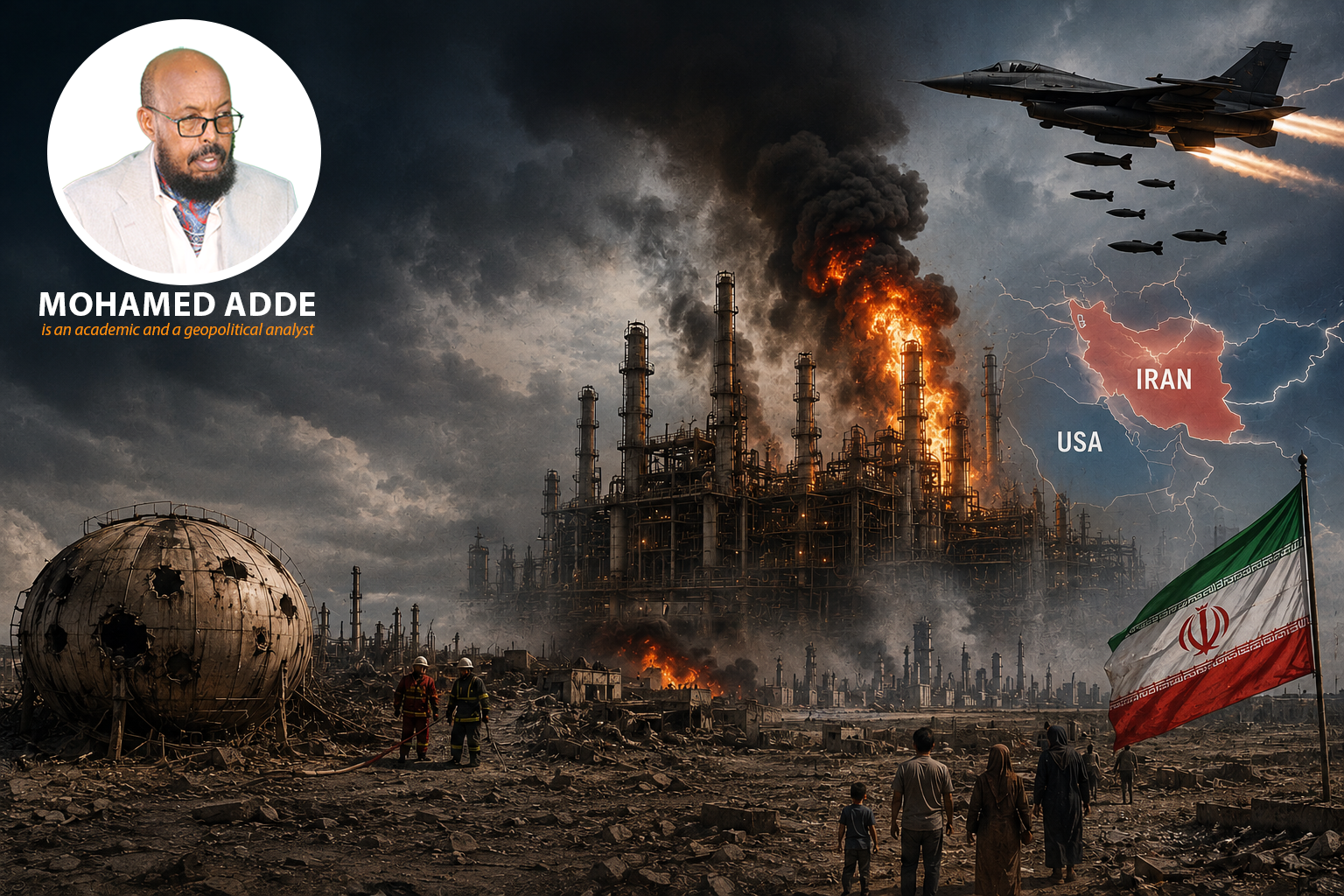

The military confrontation between the United States and Iran has entered a new and potentially more dangerous phase. After nearly a week of sustained U.S. air strikes, the conflict is no longer centred solely on military installations. Instead, it increasingly involves strategic infrastructure that supports both Iran’s military capabilities and its civilian economy. This evolution has intensified accusations, heightened humanitarian concerns and raised fears that the war could have lasting consequences far beyond the battlefield.
According to U.S. officials, the expanded campaign is designed to systematically weaken Iran’s ability to project military power and threaten regional security. Washington says the strikes are targeting missile launch facilities, surveillance systems, logistics hubs and transportation networks that support Iran’s armed forces, particularly in the country’s south. Military planners view this region as critical because it hosts naval facilities, key ports and infrastructure linked to the Strait of Hormuz, through which a significant share of the world’s oil exports passes.
The United States argues that degrading these capabilities will reduce Iran’s capacity to disrupt international shipping, launch missile attacks and support allied armed groups across the Middle East. American officials also present the operation as part of a broader strategy of applying sustained military pressure while preserving leverage for any future diplomatic negotiations. President Donald Trump reinforced that approach by indicating that Iran’s energy infrastructure would be targeted only at a later stage, signalling an intention to increase pressure gradually rather than all at once.
Iran presents a sharply different picture. Officials in Tehran accuse Washington of expanding its attacks beyond legitimate military objectives and striking facilities that are essential to civilian life. Iranian state media report damage to railway stations, bridges, residential neighbourhoods, water infrastructure and food storage facilities. Tehran argues that these attacks violate international humanitarian law by placing civilians and essential public services at risk.
While several international media outlets have confirmed that infrastructure has been damaged during the campaign, many of the specific claims made by both sides remain difficult to verify independently because of the restricted access to affected areas. As in many modern conflicts, information itself has become part of the battlefield, with competing narratives aimed at shaping international opinion.
The strategic importance of southern Iran explains much of the current military focus. The region contains Bandar Abbas, Iran’s principal naval base, along with ports, missile facilities, radar installations and supply routes that underpin both national defence and regional military operations. Disrupting these networks has the potential to weaken Iran’s operational flexibility while simultaneously increasing the economic cost of continuing the conflict.
However, attacks on infrastructure inevitably carry broader consequences. Roads, bridges, railways and water systems often serve both military and civilian purposes. Damage to these networks can slow military logistics, but it can also disrupt food distribution, healthcare, public transportation and access to clean water for ordinary citizens. This dual-use nature of infrastructure makes such targets among the most controversial in modern warfare.
Iran has responded by widening its own military operations. Missile and drone attacks have targeted U.S. military facilities and allied positions across several Gulf states. These retaliatory strikes demonstrate Tehran’s determination to show that it retains the ability to impose costs on the United States and its regional partners despite the sustained American air campaign. At the same time, they increase the risk that the conflict could draw more countries directly into the fighting.
The broader implications extend well beyond Iran and the United States. Continued military operations near the Strait of Hormuz threaten one of the world’s most important maritime trade routes. Any prolonged disruption could affect global energy markets, increase shipping costs and place additional pressure on economies already facing inflation and supply chain challenges. Regional instability could also deepen humanitarian suffering through displacement, infrastructure damage and reduced access to essential services.
International concern is therefore growing. Humanitarian organisations and the United Nations have warned that all parties must respect international humanitarian law and protect civilians and civilian infrastructure wherever possible. The distinction between military necessity and civilian protection will remain one of the defining legal and moral questions as the conflict evolves.
Ultimately, the latest phase of the U.S.-Iran confrontation illustrates how modern wars increasingly target the systems that sustain national power rather than only conventional military forces. Transportation networks, communication systems, logistics hubs and economic infrastructure have become central to military strategy. Yet these same systems are also indispensable to civilian life, making every strike carry consequences that extend far beyond immediate tactical objectives.
Whether this campaign compels Iran to alter its strategic calculations or instead hardens its resolve remains uncertain. What is already clear, however, is that the conflict is entering a more complex stage—one in which military success, humanitarian costs and geopolitical consequences are becoming ever more tightly intertwined. As both sides continue to escalate, the challenge for the international community will be to prevent a regional conflict from evolving into a wider crisis with global repercussions.
Mohamed Mohamoud Adde is an academic and a geopolitical analyst