

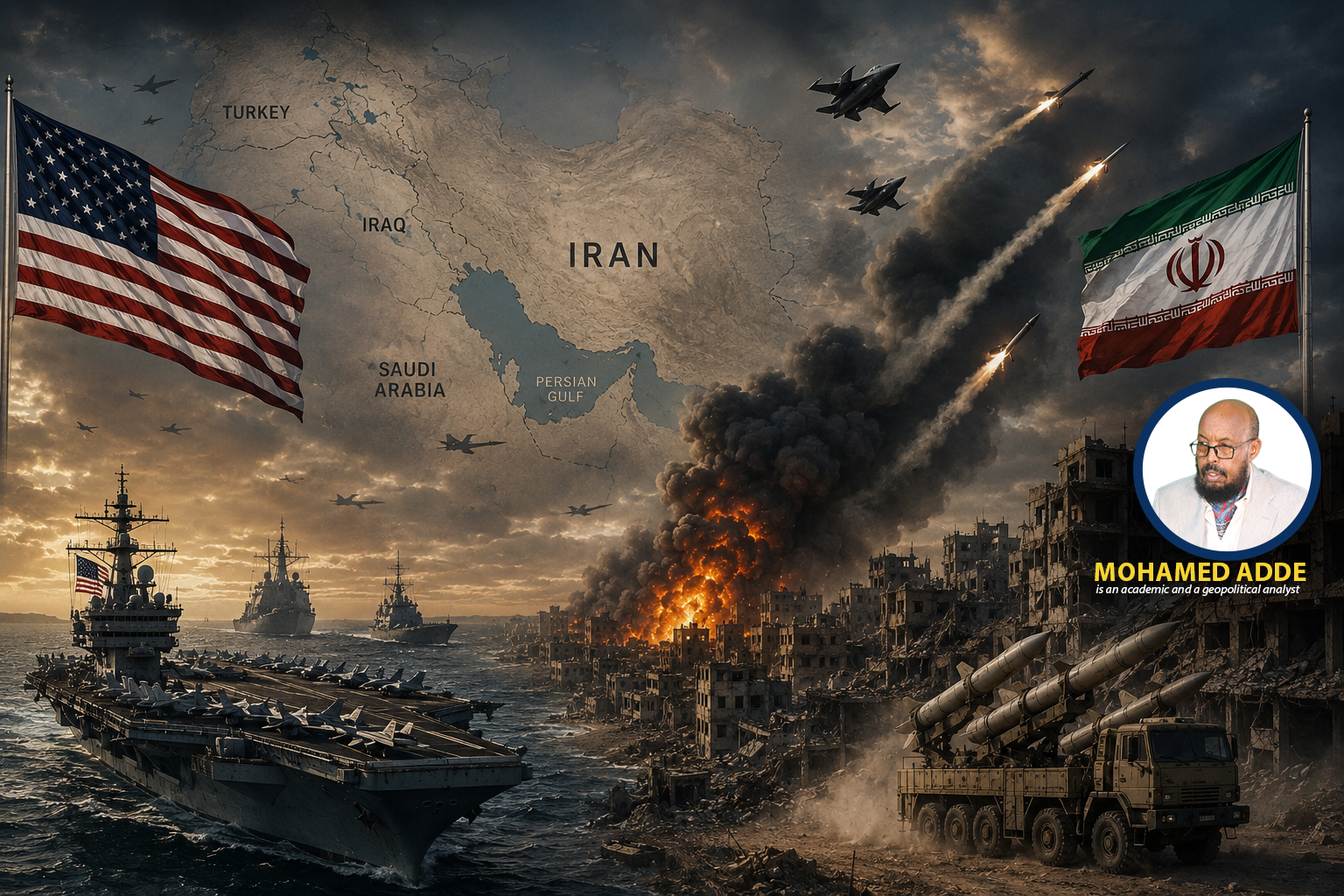

The confrontation between the United States and Iran has entered another dangerous chapter, with military exchanges intensifying and diplomatic efforts struggling to keep pace. While Washington continues to justify its air campaign as a necessary response to attacks on American forces and a measure to safeguard regional security, Tehran insists it has so far exercised restraint. Yet that restraint, Iranian officials warn, should not be mistaken for weakness.
The latest warning came from Mohsen Rezaee, a senior military adviser and former commander of Iran’s Islamic Revolutionary Guard Corps, who declared that if the United States persists with its bombing campaign, Iran will abandon its measured response and move into what he described as a full-scale war. According to Rezaee, Iran has deliberately limited the scope of its retaliation to prevent the conflict from spiralling into an uncontrollable regional confrontation. However, he argued that continued American attacks would leave Tehran with little choice but to expand its military response.
His remarks reflect a growing belief within Iran’s leadership that the conflict has reached a decisive moment. Iranian officials maintain that their missile and drone strikes have been carefully calibrated, while emphasizing that far greater military capabilities remain available should the confrontation escalate further. This messaging is intended not only for Washington but also for regional governments hosting American military installations, many of which could become targets if the conflict widens.
From Washington’s perspective, the campaign remains focused on degrading Iran’s military capabilities rather than seeking regime change. American officials argue that strikes against missile facilities, Revolutionary Guard infrastructure and drone bases are designed to reduce threats to U.S. personnel, allies and international shipping routes. Nevertheless, each new exchange of fire increases the possibility of miscalculation, making the distinction between a limited military operation and a regional war increasingly difficult to sustain.
Beyond the battlefield, the consequences are already being felt across the Middle East. Financial markets remain sensitive to developments around the Strait of Hormuz, a vital artery for global energy supplies. Shipping companies are reassessing maritime risks, while neighbouring states continue to strengthen their air defences and emergency preparedness. Even countries seeking neutrality recognise that a prolonged conflict would inevitably disrupt trade, investment and regional stability.
Perhaps the most striking feature of the current crisis is the limited visibility of the United Nations. In previous regional conflicts, the UN often served as a platform for emergency diplomacy, humanitarian coordination and confidence-building measures between hostile parties. Today, however, its influence appears constrained by deep divisions among major powers in the Security Council. Calls for restraint have been issued, but they have yet to translate into a coordinated international initiative capable of halting the escalation.
This absence leaves a dangerous diplomatic vacuum. As military actions increasingly shape political decisions, opportunities for negotiation become narrower. Without an effective multilateral mechanism to facilitate dialogue, each side is more likely to rely on deterrence through force rather than diplomacy through compromise. History shows that wars often expand not because leaders initially seek total conflict, but because communication channels collapse and retaliation gradually replaces negotiation.
The United Nations still possesses unique tools that no individual state can easily replicate. It can convene emergency Security Council sessions, mobilise humanitarian assistance, encourage back-channel diplomacy and provide an internationally recognised framework for ceasefire negotiations. While political disagreements among permanent members continue to limit its effectiveness, abandoning the UN’s diplomatic role altogether would remove one of the few remaining forums where both adversaries can indirectly engage.
The current trajectory should concern not only the parties directly involved but also the wider international community. A prolonged U.S.-Iran conflict would have implications far beyond the Middle East, affecting global energy markets, international trade, financial stability and regional security architectures. The costs of inaction could therefore extend well beyond the battlefield.
As military rhetoric grows sharper and warnings become increasingly explicit, the world faces a narrowing window for diplomacy. Rezaee’s latest statement illustrates that Tehran believes the conflict has not yet reached its maximum intensity. Whether that warning becomes reality may depend less on military calculations than on whether international diplomacy—led by the United Nations and supported by influential regional and global powers—can regain the initiative before events overtake negotiations.
Mohamed Mohamoud Adde is an academic and a geopolitical analyst