

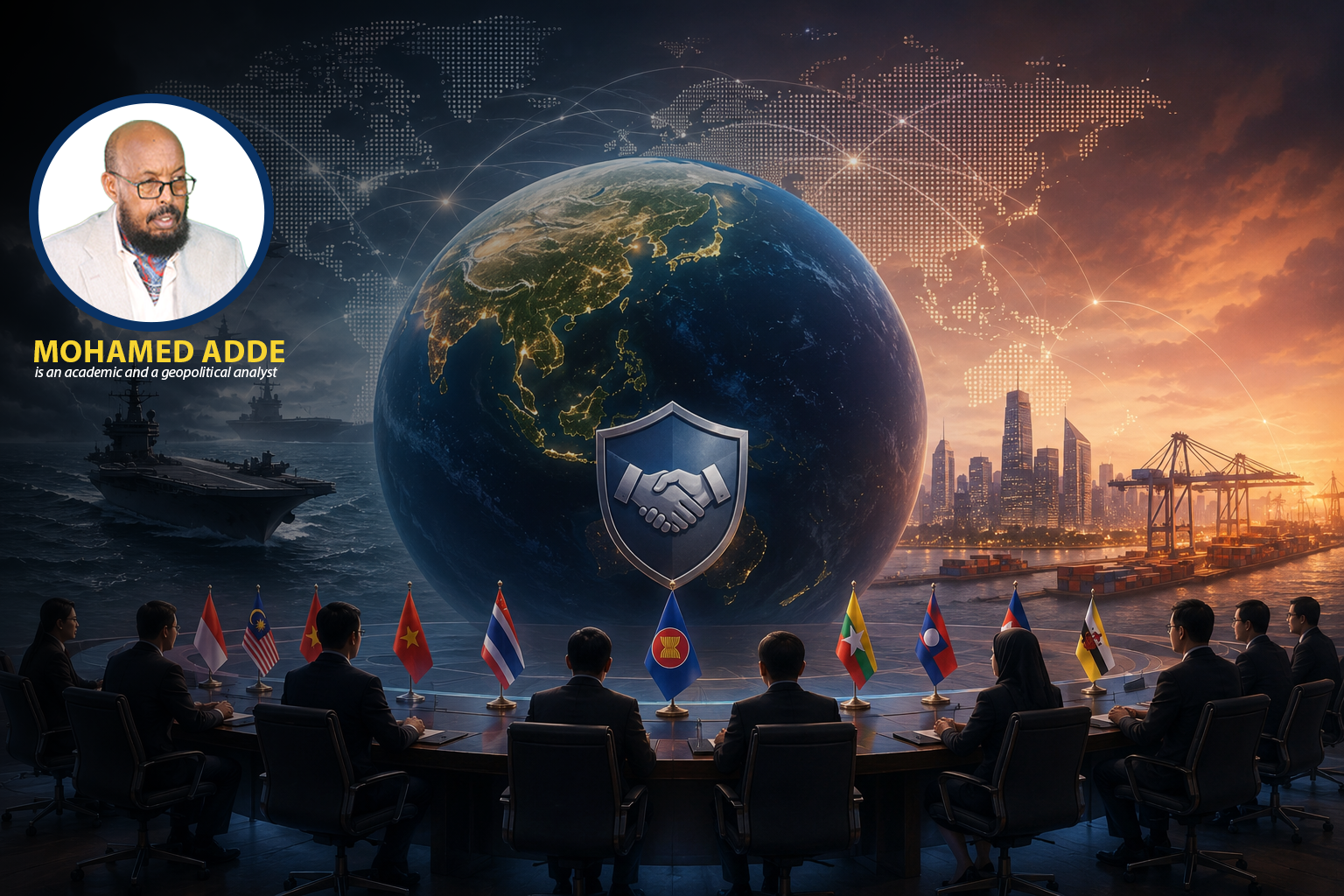

As global tensions deepen and the international order becomes increasingly unpredictable, alliances are once again emerging as one of the defining features of world politics. The call by Philippine Foreign Secretary Theresa Lazaro for the Association of Southeast Asian Nations (ASEAN) to work together against mounting external pressures is therefore more than diplomatic rhetoric. It reflects a profound recognition that in the twenty-first century, no nation—regardless of its size or economic strength—can successfully navigate geopolitical competition, economic disruption and transnational security threats alone.
The ASEAN meeting in Manila comes at a pivotal moment. The international system is undergoing one of its most significant transformations since the end of the Cold War. Strategic rivalry between the United States and China is reshaping trade, technology and security policies. The ongoing conflict involving the United States and Iran has heightened uncertainty in global energy markets. Wars in Europe and the Middle East continue to reverberate across supply chains, financial markets and food security. At the same time, climate change, cybercrime, pandemics and artificial intelligence present challenges that transcend national borders.
Against this backdrop, ASEAN’s greatest asset is not military power or economic dominance. Its strength lies in collective diplomacy. Since its establishment in 1967, ASEAN has sought to replace rivalry with dialogue and confrontation with cooperation. Although its consensus-based decision-making is often criticised as slow, it has enabled countries with diverse political systems, cultures and historical experiences to maintain one of the world’s most stable regional environments.
Foreign Secretary Lazaro’s appeal for unity acknowledges a strategic reality. Individually, ASEAN’s member states have limited leverage when negotiating with major powers. Collectively, however, they represent a market of nearly 700 million people, one of the world’s fastest-growing economic regions and a critical hub for global manufacturing and maritime trade. Acting together allows ASEAN to negotiate from a position of greater confidence while preserving its independence.
The importance of alliances has become increasingly evident across the world. NATO has expanded in response to changing European security dynamics. The BRICS grouping continues to broaden its economic and political influence. The Shanghai Cooperation Organisation has strengthened cooperation across Eurasia. New strategic partnerships such as AUKUS and the Quad illustrate how countries are adapting to emerging security challenges in the Indo-Pacific. Meanwhile, the African Continental Free Trade Area demonstrates how regional integration can become a catalyst for economic transformation.
These developments illustrate an enduring lesson: in today’s interconnected world, influence increasingly belongs not only to powerful nations but also to effective coalitions.
For ASEAN, however, maintaining unity is not without challenges. Member states differ significantly in their strategic priorities. Some maintain close security ties with Washington, while others enjoy extensive economic partnerships with Beijing. Territorial disputes in the South China Sea continue to test regional solidarity. The prolonged crisis in Myanmar has exposed divisions over how the organisation should respond to internal conflicts among its members.
Yet these differences also underline why ASEAN remains indispensable. Without an institutional framework for consultation, disagreements could evolve into deeper regional instability. ASEAN provides a platform where competing interests can be managed through diplomacy rather than confrontation, preserving a balance that benefits both the region and the wider international community.
The Manila summit also highlights an important shift in the nature of diplomacy itself. Security today extends far beyond military concerns. Economic resilience, digital infrastructure, cybersecurity, energy security, food supplies, public health and technological innovation have become equally important components of national power. Modern alliances therefore encompass cooperation on investment, infrastructure, disaster response, scientific research and emerging technologies alongside traditional defence matters.
This broader conception of partnership reflects the realities of globalisation. A disruption in one part of the world can quickly affect industries, markets and households thousands of kilometres away. Supply-chain interruptions, cyberattacks or energy shortages are rarely confined within national borders. Regional cooperation has therefore become an essential instrument for managing shared vulnerabilities.
For smaller and middle-income countries, alliances offer something even more valuable: strategic autonomy. By working through regional organisations, states can reduce dependence on any single great power while diversifying their diplomatic and economic relationships. Rather than being forced to choose sides, they gain greater flexibility to pursue policies aligned with their national interests.
The significance of the Manila meeting therefore extends well beyond Southeast Asia. It serves as a reminder that regional organisations are becoming increasingly important pillars of global governance. While major powers often dominate headlines, institutions such as ASEAN continue to play a vital role in preventing conflict, promoting dialogue and sustaining economic cooperation in regions that are central to global prosperity.
The twenty-first century is unlikely to be defined by isolated national achievements. Instead, it will reward those countries capable of building trust, fostering partnerships and adapting collectively to rapidly changing circumstances. In a world characterised by uncertainty and strategic competition, cooperation has become a source of resilience rather than a sign of weakness.
Theresa Lazaro’s call for ASEAN solidarity ultimately reflects this broader reality. The future will belong not simply to the strongest nations, but to those capable of transforming shared interests into lasting partnerships. In an increasingly interconnected world, alliances are no longer optional instruments of foreign policy—they are fundamental pillars of security, stability and sustainable development.
Mohamed Mohamoud Adde is an academic and a geopolitical analyst