

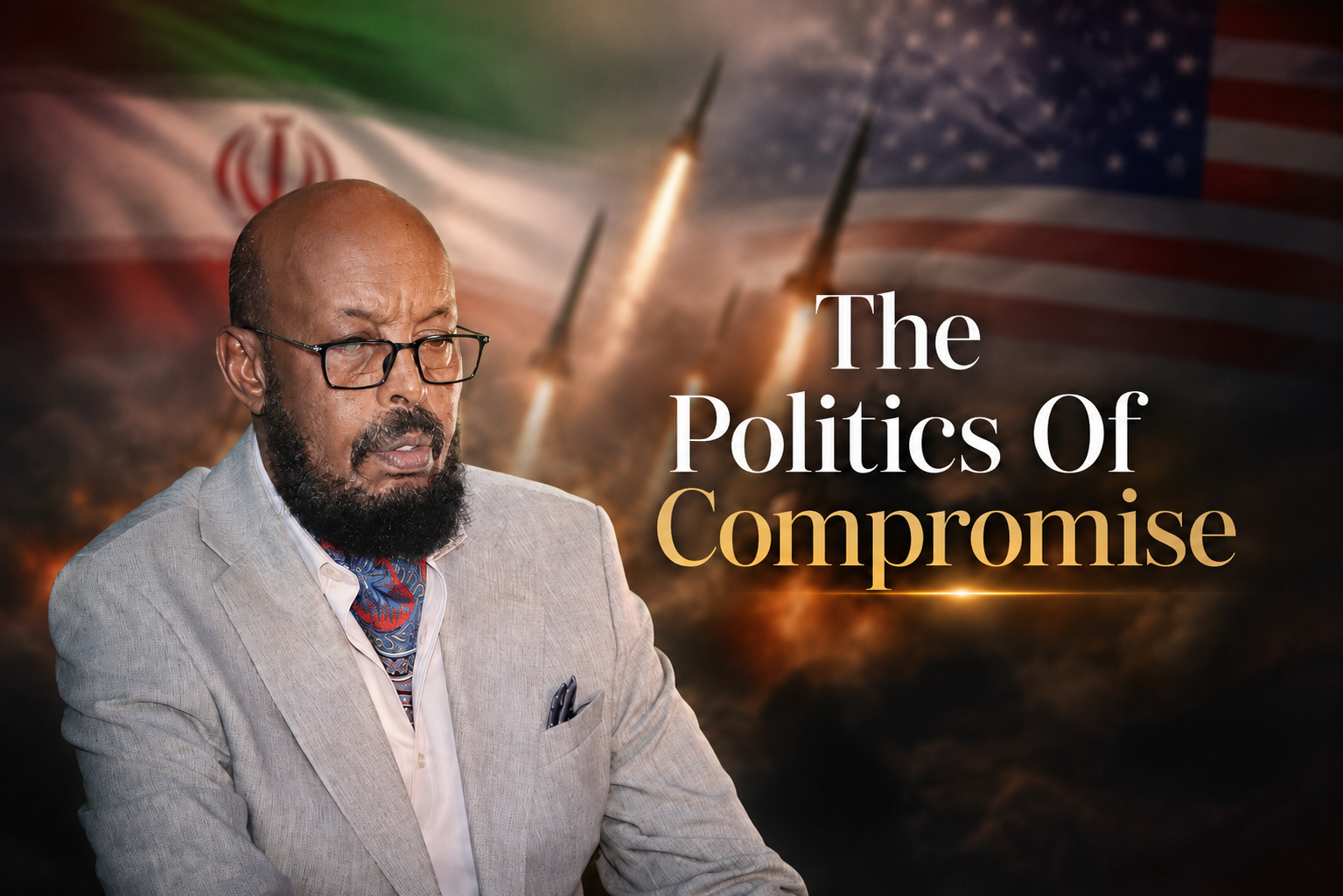

For more than four decades, hostility between the United States and Iran has shaped the political destiny of the Middle East. Sanctions, military confrontations, proxy conflicts, accusations over nuclear ambitions, and regional rivalries have defined relations between the two nations. Yet, according to recent international press reports, Washington and Tehran appear to be on the verge of signing a Memorandum of Understanding (MoU), a development that may mark one of the most consequential diplomatic shifts in recent years.
The proposed agreement, expected to be formally signed after intense negotiations, is not yet a final peace treaty or comprehensive settlement. Rather, it is understood to be a framework agreement — a diplomatic bridge designed to reduce hostilities, stop escalation, and create political space for deeper negotiations, especially over Iran’s nuclear programme and sanctions relief.
To understand the significance of this development, one must appreciate the depth of mistrust between both countries. Since the 1979 Iranian Revolution, relations have largely been characterised by suspicion and confrontation. The United States has long accused Iran of seeking nuclear weapons capability, while Iran argues that its nuclear programme is intended for peaceful civilian purposes, including energy production and scientific research. The collapse of earlier agreements, including the 2015 nuclear arrangement, only deepened tensions and hardened political positions on both sides.
What makes the current MoU particularly noteworthy is that it appears to combine military de-escalation with economic and political incentives. International reporting suggests that the proposed agreement includes a temporary ceasefire framework, reopening of the strategically important Strait of Hormuz, discussions around sanctions relief, and a structured period for continued negotiations on nuclear issues. Some reports indicate a 60-day diplomatic window for final negotiations after the initial signing.
The Strait of Hormuz deserves special attention in understanding why the world is closely watching this development. This narrow maritime passage carries a significant share of global oil shipments. Whenever tensions rise in the Gulf, energy prices react almost immediately, affecting economies worldwide, including developing countries far from the battlefield. For nations already struggling with inflation and economic hardship, instability in energy markets can translate into higher transport costs, food prices, and general cost of living. A reduction in tensions could therefore have global economic benefits.
However, diplomacy in geopolitics is rarely straightforward. The emerging agreement also faces scepticism from critics in both Washington and Tehran. Hardline voices in Iran reportedly question whether the agreement delivers enough guarantees regarding sanctions relief and national sovereignty. Some American critics, meanwhile, argue that diplomacy may reward Iran without fully resolving concerns over uranium enrichment and regional influence. In international politics, peace agreements are often criticised not because they solve every issue immediately, but because compromise itself can appear politically uncomfortable.
One analytical question deserves serious reflection: why are both sides moving toward dialogue now?
The answer may lie in strategic exhaustion and political realism. Long conflicts often create economic pressure, diplomatic isolation, and uncertainty. Iran faces economic challenges partly driven by sanctions, while the United States must calculate the cost of prolonged instability in a strategically vital region. History repeatedly demonstrates that adversaries often negotiate not when trust suddenly emerges, but when confrontation becomes increasingly costly.
Yet caution is necessary. Memorandums of Understanding are often preliminary rather than final. They establish principles and intentions but require implementation, trust-building, and verification. Previous attempts at détente between the United States and Iran have collapsed under political pressure, changing administrations, or disagreements over compliance. Therefore, while optimism may be justified, realism remains equally important.
From a broader educational perspective, this possible agreement also teaches an important lesson in international relations: even bitter rivals eventually recognise that negotiation may achieve what military confrontation cannot. Dialogue does not necessarily mean friendship, nor does diplomacy erase ideological differences. Rather, it reflects an understanding that stability sometimes demands compromise.
If signed and implemented sincerely, the emerging US–Iran MoU could reduce regional tensions, stabilise energy markets, and open pathways toward a more predictable Middle East. Yet the ultimate success of this agreement will not be measured by signatures on paper alone, but by whether both sides demonstrate patience, restraint, and commitment to honouring what they agree.
In geopolitics, history reminds us that peace is rarely perfect — but even imperfect dialogue can sometimes prevent devastating conflict.
Mohamed Mohamoud Adde is an academic and a geopolitical analyst