

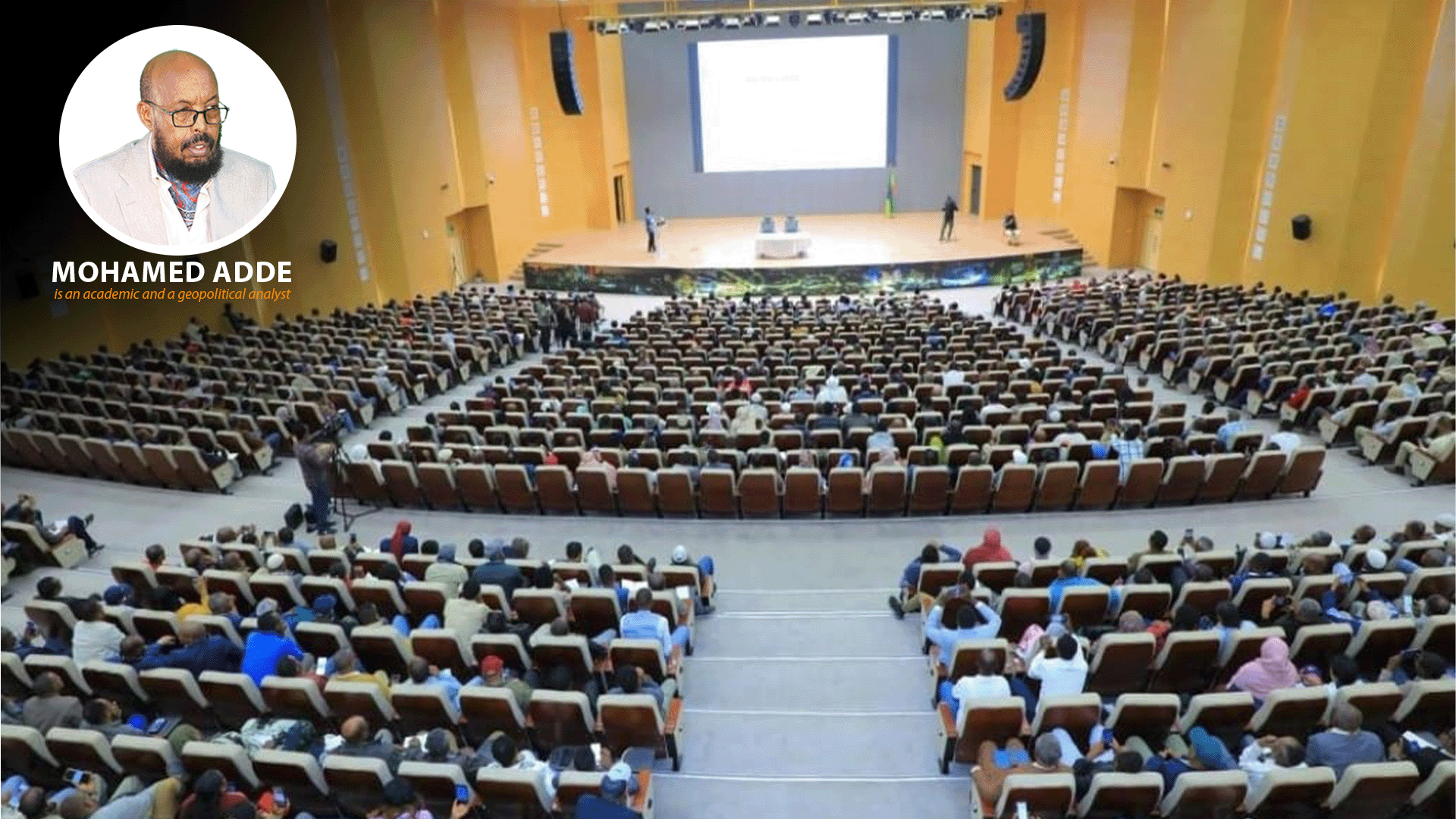

Ethiopia has entered a defining moment in its modern political history with the official opening of the National Dialogue Conference in Addis Ababa, an initiative widely viewed as one of the country’s most ambitious attempts to address decades of political divisions through dialogue rather than conflict.
The conference, convened by the Ethiopian National Dialogue Commission (ENDC), marks the culmination of years of preparation, nationwide consultations and agenda-setting exercises involving communities across the country. Established by Ethiopia’s House of Peoples’ Representatives in late 2021 as an independent institution, the ENDC was tasked with creating an inclusive platform capable of addressing the country’s most complex political and constitutional questions.
For many Ethiopians, the conference is more than a formal political event. It represents an opportunity to replace confrontation with constructive engagement and to build a shared national vision through peaceful discussion. The dialogue seeks to tackle longstanding issues that have shaped Ethiopia’s political landscape for decades, including governance, constitutional reform, federalism, national identity, power-sharing, justice, reconciliation and mechanisms for preventing future conflicts.
The launch of the conference comes after years of political and security challenges that have tested Ethiopia’s unity. Armed conflicts, political tensions and humanitarian crises have underscored the need for a comprehensive national process capable of addressing the structural causes of instability while strengthening trust among the country’s diverse communities.
Thousands of delegates representing regional states, political organizations, civil society, religious institutions, traditional leaders, professional associations, women, youth and members of the Ethiopian diaspora are participating in the conference. Their discussions are expected to focus on nationally identified agenda items collected through extensive consultations conducted by the Commission over several years.
The conference also reflects the Ethiopian government’s commitment to pursuing political solutions alongside security measures. Prime Minister Abiy Ahmed has repeatedly described dialogue as an essential pillar for achieving lasting peace, national reconciliation and sustainable development, arguing that Ethiopia’s diversity should serve as a source of strength rather than division.
A notable development is the participation of the Ogaden National Liberation Front (ONLF), whose involvement is viewed by many observers as an important step toward broadening the inclusiveness of the dialogue. Once engaged in an armed insurgency in Ethiopia’s Somali Region, the ONLF signed a peace agreement with the federal government in 2018 and has since transitioned into peaceful political participation. Its presence at the conference reflects efforts to ensure that groups with different historical experiences and political perspectives contribute to shaping Ethiopia’s future through democratic engagement rather than armed confrontation.
The participation of former armed movements alongside established political parties, civic organizations and community representatives illustrates the broader objective of transforming historical grievances into constructive national dialogue. Many analysts consider such inclusiveness essential if the process is to generate durable political consensus.
The conference has also attracted the attention of African leaders and the international community. On the eve of its opening, Prime Minister Abiy Ahmed met former Nigerian President Olusegun Obasanjo, the African Union’s former High Representative for the Horn of Africa and chief mediator of the 2022 Pretoria Peace Agreement. Their discussions focused on Africa’s experiences in reconciliation and nation-building, with Obasanjo sharing lessons drawn from Nigeria’s post-civil war recovery and his mediation efforts in Ethiopia.
International organizations, including the United Nations, have consistently emphasized that sustainable peace in Ethiopia depends on inclusive political dialogue, respect for human rights, accountability and broad participation by all sectors of society. The UN has repeatedly encouraged Ethiopian stakeholders to resolve differences through peaceful political processes capable of addressing the underlying causes of conflict.
Despite the optimism surrounding the conference, significant challenges remain. Political differences persist in several parts of the country, while some stakeholders continue to question issues related to representation and implementation. Analysts note that the success of the National Dialogue will ultimately depend not only on the quality of discussions but also on the willingness of political actors to translate agreements into practical institutional reforms.
Even so, the opening of the National Dialogue Conference represents a milestone in Ethiopia’s political evolution. It demonstrates a national determination to confront difficult questions through dialogue rather than violence and offers a structured framework for building consensus on issues that have shaped the country’s history for generations.
As deliberations begin in Addis Ababa, Ethiopians face a rare opportunity to redefine their collective future through peaceful engagement. Whether the conference ultimately delivers lasting national reconciliation will depend on continued inclusiveness, political commitment and the implementation of agreed reforms. Nevertheless, its opening marks a significant step in Ethiopia’s ongoing effort to build a more stable, united and prosperous future through dialogue.
Mohamed Mohamoud Adde is an academic and a geopolitical analyst