

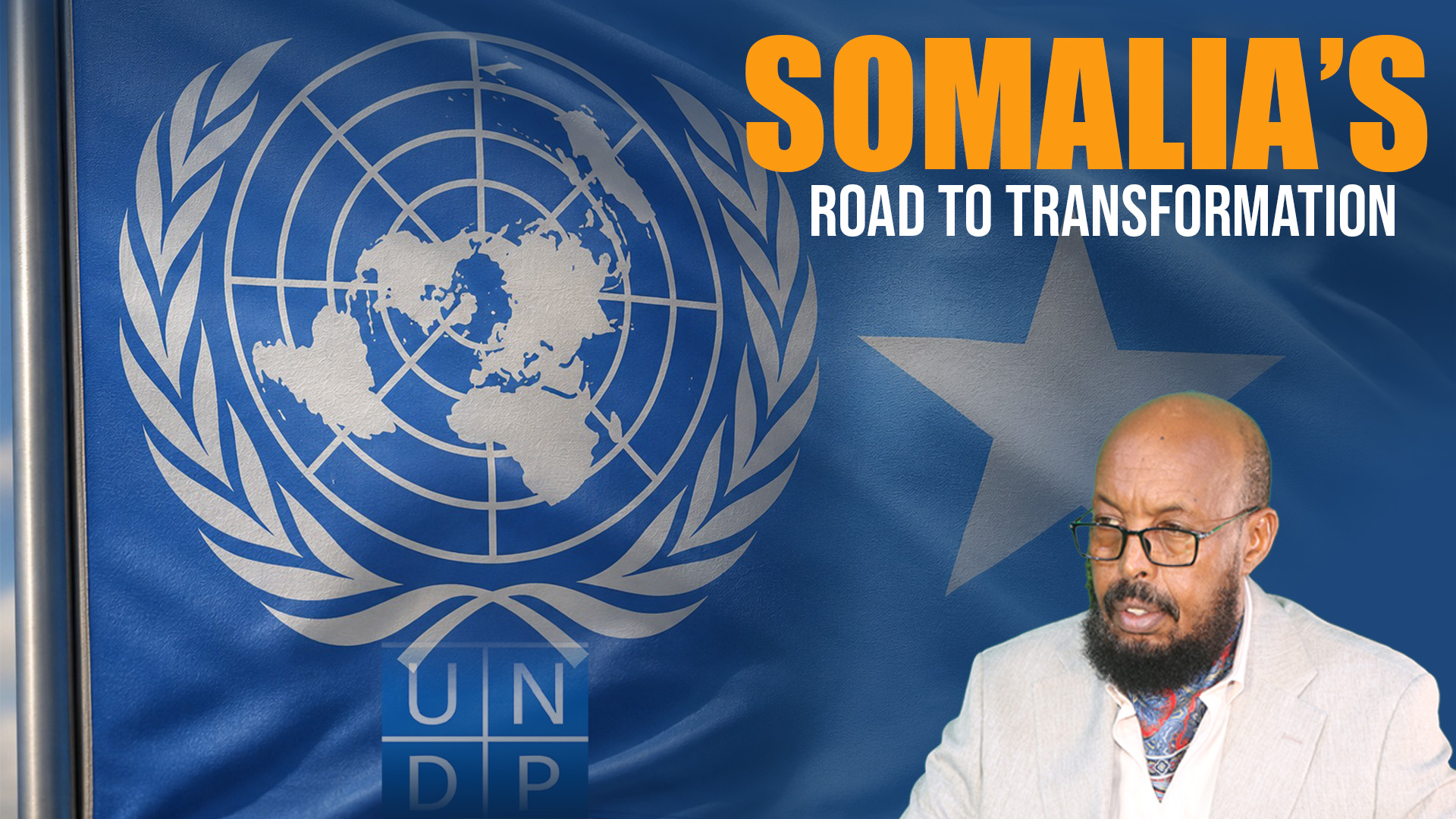

The official launch of the United Nations Development Programme (UNDP) Somalia’s five-year Country Programme Document (CPD) for 2026-2030 marks an important milestone in Somalia’s long and difficult journey towards peace, recovery, and sustainable development. More importantly, the programme reflects a growing understanding that Somalia’s challenges are interconnected and require integrated solutions rather than isolated interventions.
The new programme is built around two major pathways: fostering peace and reducing governance fragility, and simultaneously tackling economic fragility and climate vulnerability. Significantly, both priorities are anchored in Somalia’s own National Transformation Plan (NTP), indicating a shift towards nationally driven development rather than externally imposed agendas.
Somalia’s modern history explains why these priorities matter. For more than three decades, the country has endured state collapse, civil conflict, terrorism, recurrent droughts, floods, displacement, and extreme poverty. Yet despite these immense challenges, Somalia has demonstrated remarkable resilience. Federal institutions have gradually re-emerged, democratic processes have evolved, security capabilities have improved, and economic activity has steadily expanded.
However, progress remains fragile. Peace cannot flourish where institutions are weak. Economic growth cannot be sustained where insecurity persists. Likewise, governance reforms cannot succeed if climate disasters repeatedly destroy livelihoods and force communities into displacement and competition over scarce resources.
The first pathway of the UNDP programme focuses on fostering peace and reducing governance fragility. This is particularly significant because Somalia’s recovery fundamentally depends on strong and effective institutions. Building peace requires functioning justice systems, accountable governance structures, professional public administration, and inclusive political processes that accommodate Somalia’s diversity.
Over the past decade, the United Nations and international partners have played a constructive role in supporting these efforts. Through technical assistance, institutional capacity building, and support for democratic processes, they have helped Somalia strengthen its governance architecture. International partners have also assisted efforts aimed at improving local governance, public financial management, electoral systems, and the rule of law.
Equally important has been support for reconciliation and state-building initiatives. Somalia’s experience demonstrates that sustainable peace cannot be achieved solely through security measures. It requires trust between citizens and institutions and mechanisms that allow communities to resolve disputes peacefully and participate meaningfully in political life.
The second pathway addresses economic fragility and climate vulnerability simultaneously. This integrated approach is particularly relevant for Somalia because climate and economic challenges are deeply intertwined.
Somalia remains one of the countries most vulnerable to climate change despite contributing almost nothing to global greenhouse gas emissions. Repeated droughts, devastating floods, locust infestations, and environmental degradation have disrupted agricultural production and pastoral livelihoods. These environmental shocks have displaced communities, increased humanitarian needs, and intensified competition over resources.
Economic vulnerability compounds these problems. High youth unemployment, inadequate infrastructure, and limited economic opportunities continue to challenge national development efforts. Somalia’s young population represents both a tremendous opportunity and a significant responsibility. Creating employment opportunities and expanding livelihoods are essential not only for economic prosperity but also for long-term stability and peace.
The positive contribution of the United Nations and other international partners in this regard deserves recognition. International agencies have supported drought resilience programmes, disaster preparedness initiatives, water infrastructure projects, and community recovery programmes. Development partners have invested in education, health services, livelihood projects, and programmes designed to enhance resilience among vulnerable communities.
Institutions such as the United Nations Development Programme, the United Nations Children’s Fund, the United Nations Food and Agriculture Organization, the World Bank, the African Development Bank, and numerous bilateral partners have helped Somalia strengthen its development capacity. Their support has contributed to expanding social services, improving public sector institutions, and building resilience against future shocks.
Perhaps the most encouraging feature of the new Country Programme Document is its alignment with Somalia’s National Transformation Plan. This represents an important principle in modern development thinking: countries achieve better outcomes when national priorities drive international assistance. Development programmes become more effective when they support locally defined objectives and strengthen national ownership.
Nevertheless, the success of this ambitious programme will ultimately depend on implementation. International support, while essential, cannot substitute for national leadership, institutional accountability, and collective commitment. Somali authorities, civil society, the private sector, and local communities all have critical roles to play in translating plans into measurable improvements in people’s lives.
The launch of the UNDP Country Programme Document for 2026-2030 should therefore be seen as more than a development framework. It is a renewed partnership between Somalia and the international community based on mutual responsibility and shared aspirations. It recognises that peace, good governance, economic opportunity, and climate resilience are inseparable pillars of sustainable development.
Somalia has travelled a long distance from the darkest years of state collapse. Much remains to be done, and challenges remain substantial. Yet the new programme offers a coherent roadmap that builds upon hard-earned progress and seeks to address the structural vulnerabilities that have historically hindered the country’s development.
If implemented effectively and supported by continued national commitment and international partnership, the programme could become an important stepping stone towards a more peaceful, resilient, and prosperous Somalia.
Mohamed Mohamoud Adde is an academic and a geopolitical analyst