

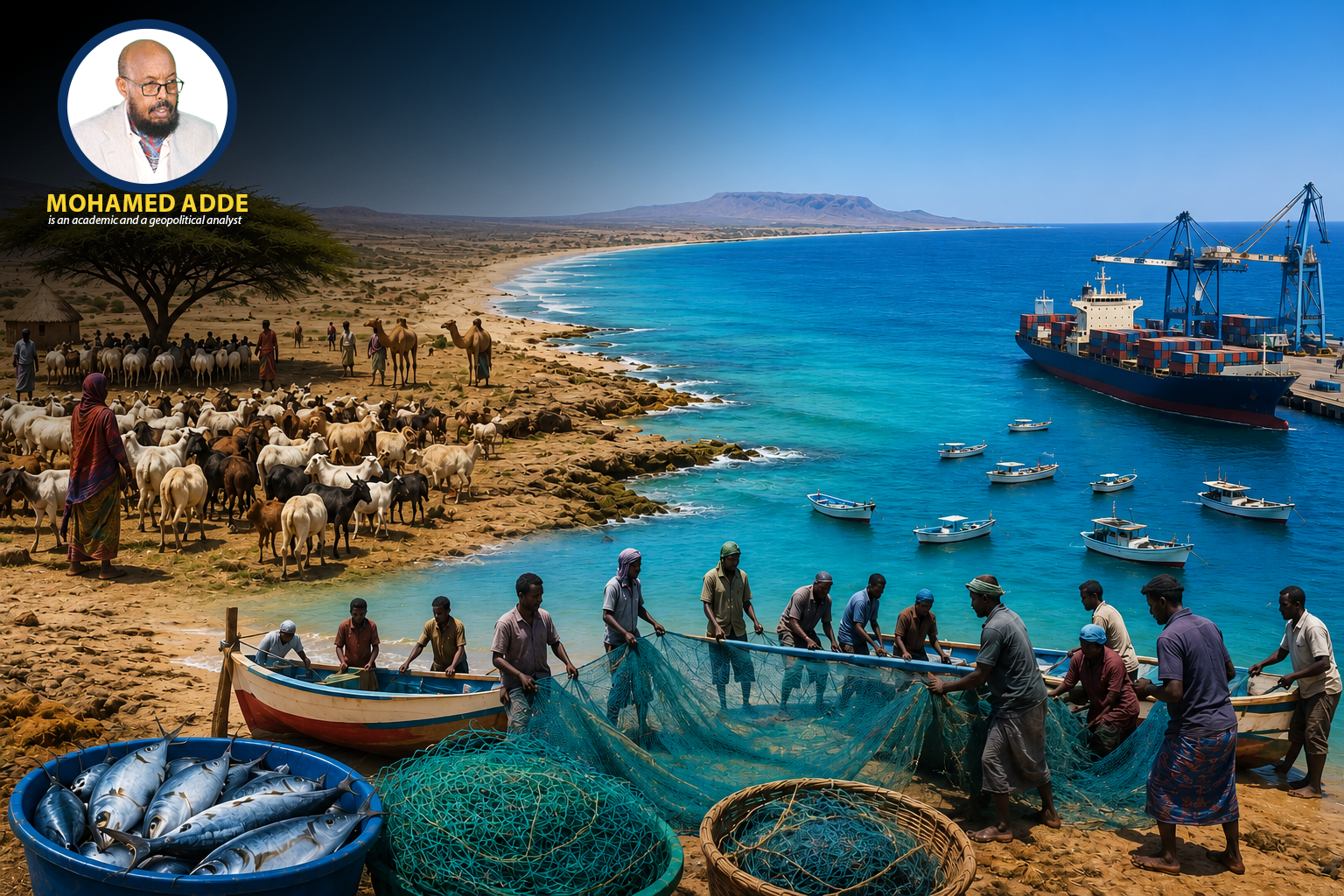

For generations, Somalia’s identity has been closely linked to its pastoral economy. Livestock has long dominated national exports and provided livelihoods for millions of families. Yet beyond its dry plains lies another national asset of immense value that has remained largely untapped: the sea. Stretching approximately 3,333 kilometres along the Gulf of Aden and the Indian Ocean, Somalia has the longest mainland coastline in Africa and controls an Exclusive Economic Zone covering nearly one million square kilometres. The United Nations, the Food and Agriculture Organization (FAO), and the World Bank regard these vast marine resources as the foundation of a blue economy capable of transforming the country’s future if managed sustainably.
The concept of the blue economy goes far beyond fishing. The United Nations defines it as the sustainable use of ocean and coastal resources to generate economic growth, improve livelihoods and create jobs while preserving the health of marine ecosystems. In practical terms, it encompasses fisheries, aquaculture, ports and maritime transport, coastal tourism, marine renewable energy, shipbuilding and repair, marine biotechnology, and the conservation of coastal habitats. For Somalia, this means that the sea should not be viewed merely as a source of fish, but as an integrated economic system capable of supporting long-term national development.
Among Somalia’s marine assets, fisheries remain the most immediately valuable. The country’s waters contain rich stocks of tuna, lobster, shrimp, sardines, mackerel and many other commercially important species. These resources supply food to local communities while offering significant export opportunities. International experts have repeatedly noted that, if harvested responsibly and processed locally, Somalia’s fisheries could become one of the country’s largest non-livestock sources of foreign exchange, generate thousands of jobs and strengthen national food security.
Despite this enormous potential, Somalia has historically captured only a small fraction of the wealth available in its waters. Decades of civil conflict weakened state institutions responsible for regulating fisheries, protecting territorial waters and supporting coastal communities. During this period, illegal, unreported and unregulated fishing expanded dramatically as foreign vessels exploited Somali waters with limited oversight. The result was not only a substantial economic loss but also growing pressure on fish stocks and increasing hardship for local fishermen whose catches and incomes declined.
Recognising these challenges, Somalia has begun laying the foundations for a modern and sustainable fisheries sector. With technical support from the FAO and financing from the World Bank, the country has introduced a Fisheries Information Management System that collects scientific data on fish stocks, fishing activity and marine resources. Reliable information enables authorities to establish sustainable catch limits, monitor the health of fish populations and make evidence-based policy decisions. International experts view this system as a critical step towards responsible fisheries management and the long-term protection of Somalia’s marine wealth.
The World Bank’s Badmaal Sustainable Fisheries Project complements these reforms by strengthening fisheries governance and investing in coastal infrastructure. Modern landing sites, cold-storage facilities, ice plants, processing centres and improved transport networks reduce post-harvest losses and allow fishermen to market higher-quality products domestically and internationally. Instead of exporting raw fish with limited value, Somalia has the opportunity to build processing industries that create employment, increase export earnings and stimulate wider economic activity in coastal regions.
Improving governance has also become essential in the fight against illegal fishing. Somalia has introduced offshore fishing licences, vessel monitoring systems and reporting requirements designed to increase transparency and restore national control over marine resources. These measures not only discourage illegal activities but also ensure that revenues generated from fishing licences can be reinvested in developing the domestic fisheries sector, improving enforcement capacity and supporting coastal communities.
The opportunities presented by Somalia’s blue economy extend well beyond fisheries. The country’s strategic location along one of the world’s busiest maritime corridors places it at the crossroads of international trade linking Africa, the Middle East and Asia. Efficient ports, modern logistics services and reliable maritime infrastructure could transform Somalia into a regional commercial gateway, facilitating trade, attracting investment and supporting broader economic integration across the Horn of Africa.
Aquaculture represents another promising frontier. Fish farming can supplement wild fisheries, reduce pressure on natural fish stocks and provide a stable supply of seafood throughout the year. With appropriate investment, aquaculture can generate employment, particularly for young people and women, while strengthening food security and creating new export opportunities. The development of fish processing, packaging and certification industries would further increase the value retained within Somalia rather than allowing economic benefits to flow abroad.
Healthy marine ecosystems are equally important to the country’s future. Mangrove forests, coral reefs and coastal wetlands provide breeding grounds for fish, protect shorelines from erosion and support biodiversity. The World Bank’s climate assessments emphasise that conserving these ecosystems strengthens resilience to climate change while sustaining fisheries and coastal livelihoods. Protecting nature is therefore not an obstacle to economic development; it is one of the conditions necessary for ensuring that marine resources continue generating income for future generations.
Marine tourism also offers long-term potential. Somalia’s extensive coastline, white sandy beaches and diverse marine environments could eventually support eco-tourism, recreational fishing and coastal hospitality industries as security and infrastructure continue to improve. Experiences from other coastal nations demonstrate that tourism can diversify local economies while encouraging investment in environmental conservation and community development.
Realising the full promise of Somalia’s blue economy will require continued commitment. Strong institutions, effective law enforcement, scientific research, skilled human resources, modern infrastructure and close cooperation between the Federal Government, Federal Member States and international partners remain essential. Sustainable management must guide every stage of development to ensure that today’s economic gains do not come at the expense of tomorrow’s marine resources.
Somalia’s coastline is more than a geographical feature—it is one of the country’s greatest strategic assets. For decades, its economic value has remained largely unrealised, yet the foundations for change are steadily emerging. Supported by reforms, international partnerships and growing investment, the blue economy offers Somalia an opportunity to diversify its economy, strengthen food security, create productive employment and increase national revenues. If managed wisely, the country’s vast marine resources can become a lasting pillar of prosperity, demonstrating that the ocean is not simply a boundary surrounding Somalia but one of its most valuable pathways to sustainable development.
Mohamed Mohamoud Adde is an academic and a geopolitical analyst