

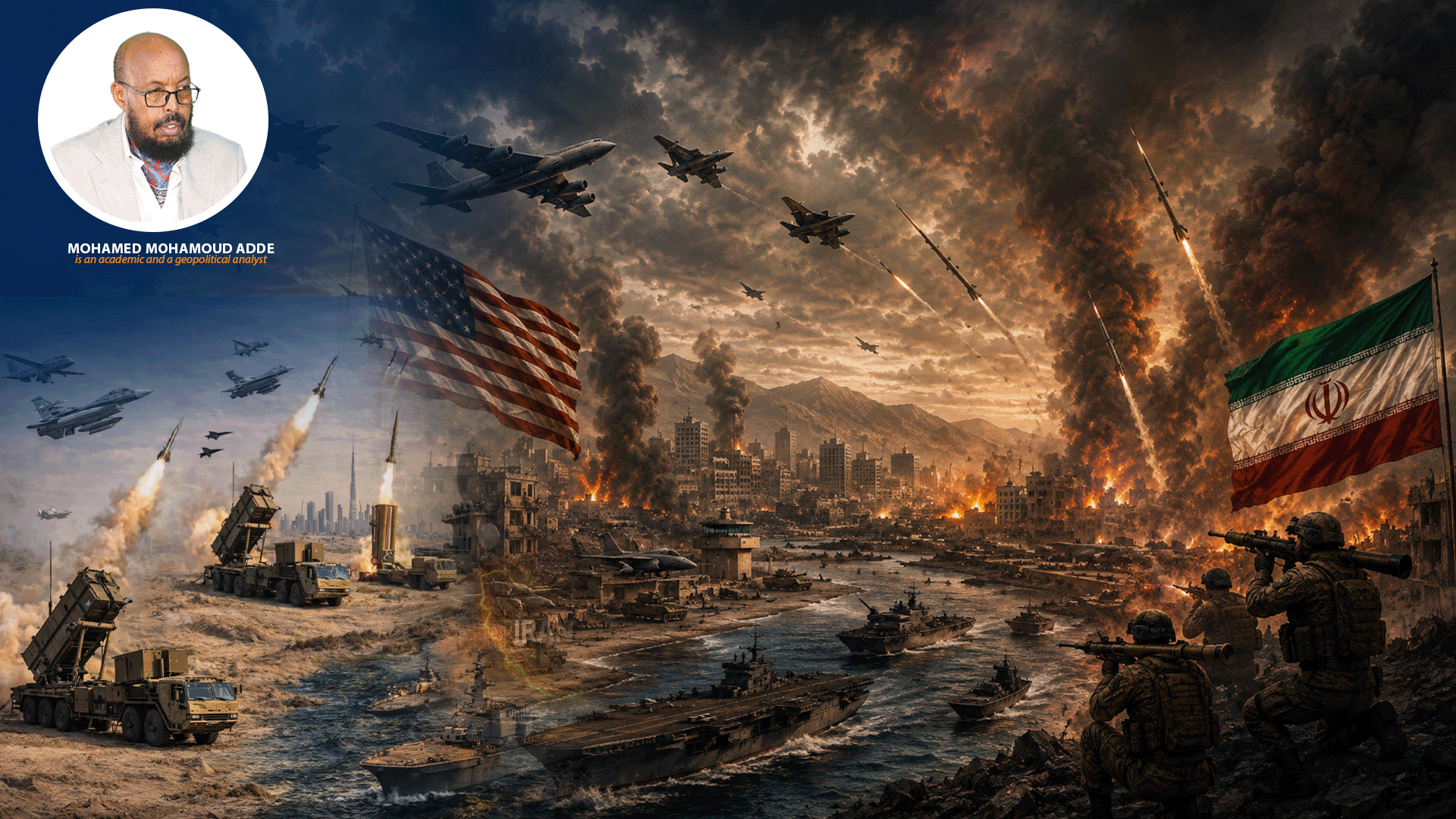

The military confrontation between the United States and Iran is extending far beyond the battlefield, sending shockwaves through the global economy and prompting governments to rethink the world’s dependence on one of its most strategic maritime routes. At the center of the crisis lies the Strait of Hormuz, a narrow waterway linking the Persian Gulf to the Gulf of Oman through which roughly one-fifth of the world’s seaborne oil and a significant share of liquefied natural gas exports pass. As fighting and tensions have intensified, concerns over the security of this vital shipping lane have once again exposed the vulnerability of the global energy system.
Financial markets have reacted swiftly to each escalation. Oil prices have fluctuated sharply as traders factor in the possibility of supply disruptions, while shipping insurance premiums for vessels transiting the Gulf have surged. Higher freight costs, coupled with longer shipping routes adopted by some companies seeking to avoid conflict zones, have increased transportation expenses that are ultimately passed on to businesses and consumers. Investors have also shifted capital toward traditional safe-haven assets such as gold and U.S. Treasury bonds, reflecting heightened uncertainty over the direction of the conflict and its broader economic consequences.
The impact extends well beyond energy markets. Rising fuel costs increase production and transportation expenses across almost every sector of the global economy, contributing to inflationary pressures at a time when many central banks are still trying to stabilize prices after years of economic disruption. Higher inflation raises the likelihood that interest rates will remain elevated for longer, slowing investment, weakening consumer spending and increasing borrowing costs for governments and businesses alike. Developing economies, many of which depend heavily on imported fuel and food, are particularly vulnerable because higher energy prices quickly translate into rising living costs and slower economic growth.
The countries facing the greatest exposure are those that rely heavily on Gulf energy supplies. Major Asian economies, including China, India, Japan and South Korea, import substantial volumes of crude oil from the Middle East, making them especially sensitive to any disruption in shipping through Hormuz. Europe has diversified its energy supplies considerably since the Russia-Ukraine war, yet it still depends on Gulf oil and liquefied natural gas to meet part of its energy demand. Consequently, instability in the Gulf continues to have worldwide repercussions regardless of where the conflict itself is taking place.
Recognizing that repeated crises in the Gulf present an enduring strategic risk, the United States and its allies are increasingly pursuing long-term solutions designed to reduce global dependence on the Strait of Hormuz rather than relying solely on military measures to keep the waterway open. The emerging strategy focuses on building alternative export routes, expanding pipeline networks, diversifying energy supplies and creating new international trade corridors capable of bypassing the region’s most vulnerable maritime chokepoint.
Saudi Arabia has become central to this effort through plans to expand the capacity of its East-West Pipeline, which carries crude oil from oil fields in the kingdom’s eastern province to export terminals on the Red Sea. By allowing more Saudi oil to reach global markets without passing through the Strait of Hormuz, the pipeline provides one of the most effective alternatives available today. The United Arab Emirates has adopted a similar approach by increasing the strategic importance of its Abu Dhabi-to-Fujairah pipeline, enabling a portion of its oil exports to reach the Gulf of Oman directly while avoiding Hormuz altogether.
Iraq is also seeking to diversify its export options. Baghdad has revived efforts to expand pipeline connections through Turkey to the Mediterranean while exploring the possibility of restoring export routes through Syria should security conditions eventually permit. Although these projects face political and logistical challenges, they reflect a broader regional recognition that dependence on a single maritime corridor carries significant economic and security risks.
Beyond energy infrastructure, governments are investing in entirely new trade networks. The India-Middle East-Europe Economic Corridor, commonly known as IMEC, has gained renewed strategic importance since the outbreak of the conflict. Originally conceived as a project to improve commercial links between India, the Gulf and Europe through integrated ports, railways and logistics hubs, IMEC is increasingly viewed as a means of strengthening supply chain resilience. While it cannot replace maritime trade through the Strait of Hormuz, it offers an alternative route for goods, energy infrastructure and digital connectivity, reducing the concentration of global commerce along one vulnerable passage.
Washington is simultaneously working to diversify the world’s oil supply by encouraging increased production across the Americas. Higher output from the United States, Canada, Brazil and Guyana is intended to lessen the global economy’s reliance on Middle Eastern crude over the coming decade. By broadening the range of major oil exporters, policymakers hope that future disruptions in the Gulf will have a smaller impact on global prices and energy security than they have in previous decades.
Many governments are also strengthening strategic petroleum reserves, expanding liquefied natural gas import facilities, investing in renewable energy and nuclear power, and developing cross-border electricity networks that reduce dependence on imported fossil fuels. These initiatives are not simply responses to the current conflict but part of a broader effort to build more resilient energy systems capable of withstanding future geopolitical crises.
The confrontation between the United States and Iran is therefore accelerating changes that were already underway in global energy and trade policy. The crisis has reinforced the view among policymakers that excessive dependence on a single maritime chokepoint represents a significant strategic vulnerability. As governments invest in alternative pipelines, diversified energy supplies and new overland trade corridors, the world is gradually reshaping the architecture of international commerce to make it less susceptible to regional conflicts.
Although the Strait of Hormuz will remain one of the world’s most important energy gateways for many years to come, the current crisis is likely to be remembered as a turning point that hastened efforts to reduce its dominance. The long-term objective is increasingly clear: to build a global energy and trade system resilient enough that future conflicts in the Gulf cannot inflict the same degree of economic disruption on the rest of the world.
Mohamed Mohamoud Adde is an academic and a geopolitical analyst