


The campaign led by American consultant Robert Stryk against Somali President Hassan Sheikh Mohamud has generated considerable controversy. By publicly calling for the President’s resignation and urging investigations into allegations of corruption and misuse of aid funds, Stryk has inserted himself into Somalia’s domestic political debate. However, an important legal question arises: when do allegations become defamation?
In law, allegations of wrongdoing are not automatically defamatory. Individuals and organisations are generally entitled to express opinions, raise concerns, and call for investigations. Freedom of expression is a fundamental principle in democratic societies. Nevertheless, this freedom is not unlimited.
Defamation generally occurs when a person publishes false statements presented as facts that damage another person’s reputation. The seriousness of the matter increases significantly when the allegations involve corruption, fraud, abuse of office, or criminal conduct. Such accusations can undermine public confidence, damage diplomatic relationships, and harm both personal and institutional reputations.
Heads of state occupy a unique legal and political position. Allegations of criminal conduct against a sitting Somali president carry international implications because they concern not only an individual but also the dignity and credibility of the state itself. Consequently, many legal systems require serious accusations to be supported by credible evidence and presented responsibly.
A careful reading of Stryk’s statement shows that it repeatedly uses terms such as “allegations,” “reported links,” and matters that should be “investigated.” From a legal perspective, such language is smokescreen and is often employed to reduce exposure to defamation claims because it does not expressly state that criminal conduct has been proven.
However, legal exposure may still arise if it can be demonstrated that the allegations were made recklessly, maliciously, or without any reasonable factual basis. Courts in many jurisdictions examine not merely the words used but also their context, implications, and likely impact upon reputation.
Could Somalia’s judicial system pursue legal action? In principle, yes. Somali courts possess jurisdiction over acts that allegedly damage the reputation and interests of Somali citizens and institutions within Somalia. The government or affected individuals could argue that the statements have harmed the reputation of the president and, by extension, the international standing of the Somali state.
Practical difficulties nevertheless exist. Mr. Stryk is an American citizen operating from the United States. Questions of jurisdiction, service of legal documents, and enforcement would inevitably arise. Any attempt to pursue proceedings would likely involve complex issues of international private law and cooperation between legal systems.
Another possible avenue would be to seek legal remedies in the United States itself. American defamation law provides robust protections for free speech, particularly regarding public officials and political matters. However, it does not provide absolute immunity. If it could be demonstrated that allegations were published with knowledge of their falsity or with reckless disregard for the truth, legal remedies may theoretically be available.
The threshold, however, is exceptionally high. American courts generally require public figures to prove actual malice, meaning the defendant either knew the allegations were false or acted with reckless indifference to whether they were true or false.
The broader issue extends beyond legal technicalities. In international relations, allegations of corruption against a foreign head of state are grave matters that can influence diplomatic relations, investment confidence, and public perceptions. Responsible discourse, therefore, requires a careful distinction between verified facts, reasonable suspicions, and unsubstantiated accusations.
Ultimately, whether Mr. Stryk’s campaign constitutes defamation is a question that would depend upon evidence, the factual basis of the allegations, the intent behind the statements, and the applicable law in the relevant jurisdiction. What can be stated with certainty is that allegations of serious wrongdoing against a foreign president are matters of considerable gravity and, in any society governed by the rule of law, should rest upon credible evidence rather than assertion alone.
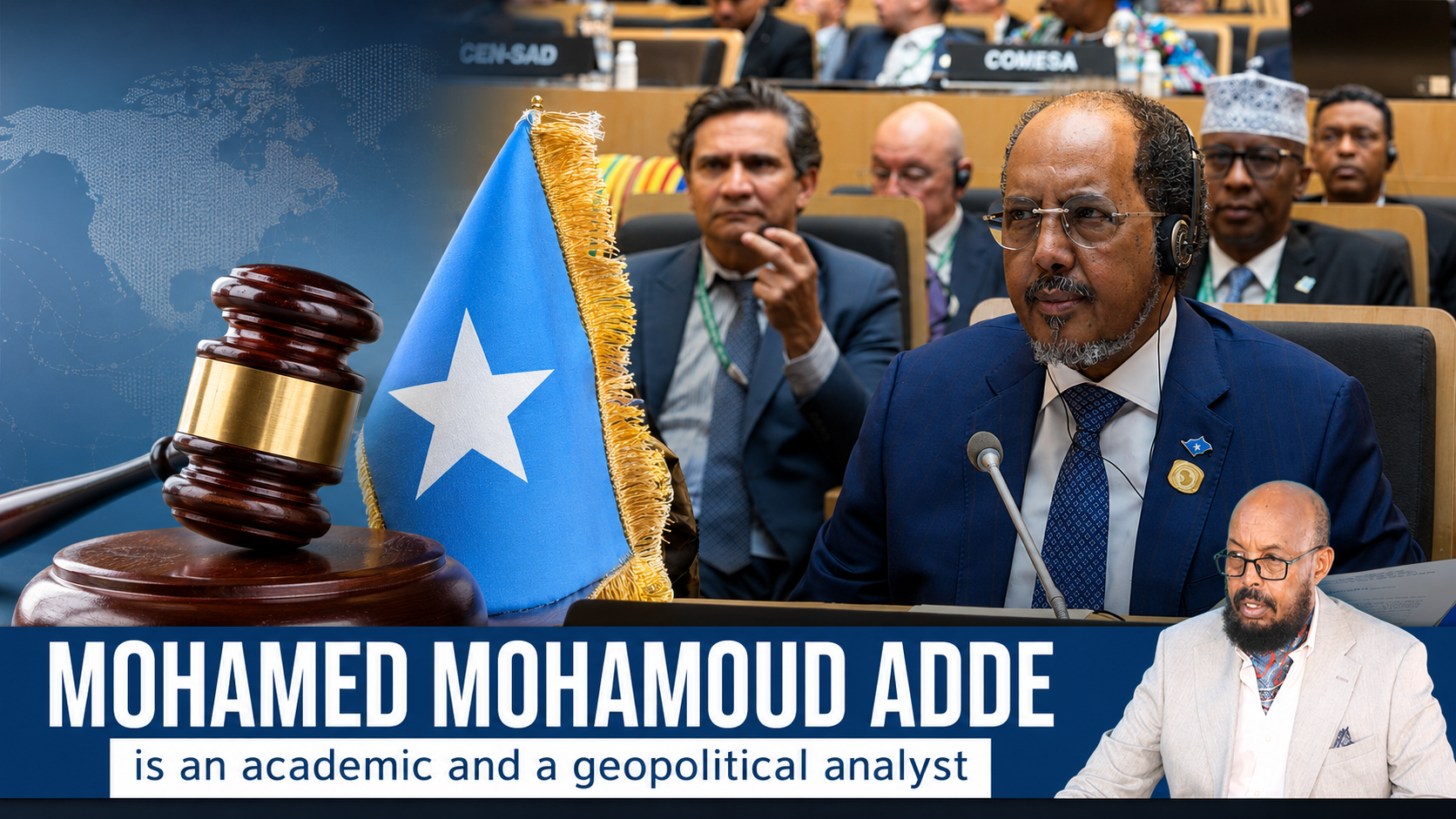
Mohamed Mohamoud Adde is an academic and a geopolitical analyst