

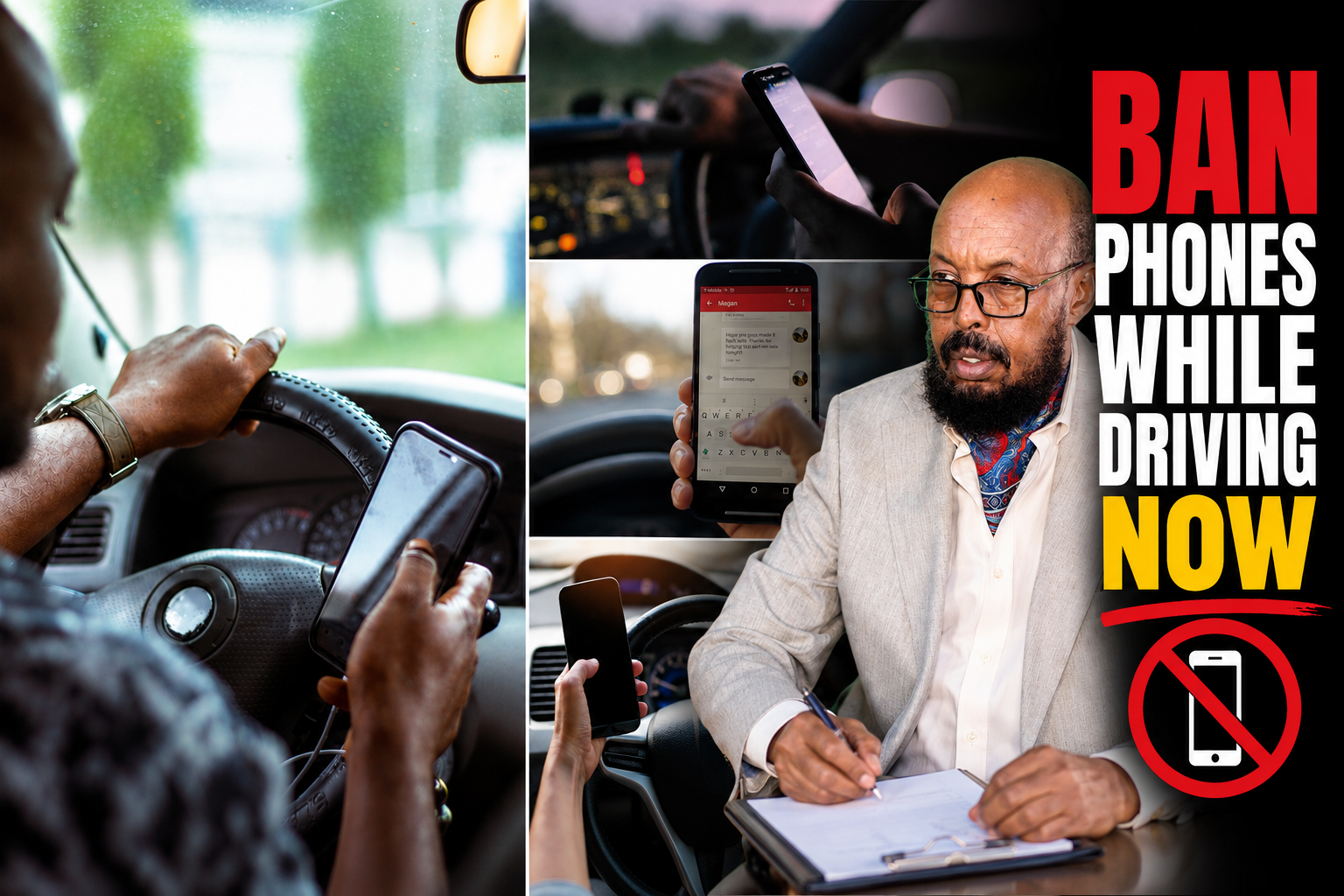

Road transport is the lifeblood of modern society. It enables people to travel to work, transport goods, attend schools, and visit families and friends. Yet roads are increasingly becoming dangerous spaces due to a growing habit that many drivers have adopted—using mobile phones while driving.
In many cities and towns, it is common to see drivers holding phones to their ears, sending messages, scrolling through social media, watching videos, or answering calls while behind the wheel. This behaviour has become so widespread that many motorists no longer consider it a serious offence. However, mobile phone use while driving is one of the most dangerous forms of distracted driving and contributes significantly to road accidents worldwide.
Driving requires full concentration. A driver must constantly observe the road, monitor the speed of the vehicle, check mirrors, anticipate the actions of pedestrians, cyclists, and other motorists, and react instantly to unexpected events. Using a mobile phone interrupts this concentration. Even a few seconds of distraction can have devastating consequences.
There are already numerous hazards on our roads. Many roads suffer from poor infrastructure, including potholes, inadequate street lighting, and damaged traffic signs. In urban areas, heavy congestion and traffic jams demand increased attention from drivers. Pedestrians often cross roads unexpectedly, and children may suddenly run onto the street. Motorcyclists weave between vehicles, while livestock occasionally wander onto roads. During rainy seasons, poor drainage can flood streets and reduce visibility.
These hazards alone require motorists to exercise maximum caution. Introducing mobile phone use into this already challenging environment creates a perfect recipe for disaster.
The dangers of mobile phone use while driving are numerous. First, it causes visual distraction. Drivers take their eyes off the road to read messages or view information on their phones. A vehicle travelling at moderate speed can cover many metres in just a few seconds. During that brief period, a child may cross the road, another vehicle may brake suddenly, or an obstacle may appear.
Second, mobile phone use creates manual distraction. A driver holding a phone has only one hand available to control the steering wheel. This reduces the ability to make sudden manoeuvres or maintain proper vehicle control.
Third, there is cognitive distraction. Even when using hands-free technology, conversations can divert mental attention away from driving. Drivers become absorbed in discussions and may fail to notice hazards directly in front of them.
The consequences are severe. Road crashes result in injuries, disabilities, and deaths. Families lose loved ones, children lose parents, and communities suffer emotional trauma. Serious accidents place additional burdens on hospitals and emergency services. Many victims who survive accidents require long-term medical treatment and rehabilitation.
The economic costs are equally significant. Vehicles are damaged or destroyed. Businesses lose valuable employees. Productivity declines, and residents spend substantial resources on medical care. In developing countries, where health systems and infrastructure are already under pressure, road accidents create further social and economic hardship.
The alarming reality is that most mobile phone-related accidents are entirely preventable. They occur not because of unavoidable mechanical failures or natural disasters but because of poor choices made by drivers. No telephone call, text message, or social media notification is more important than human life.
Public education campaigns must intensify efforts to address this problem. Traffic authorities should issue strict warnings, schools should conduct awareness programmes, and the media must continually highlight the dangers of distracted driving. However, despite these initiatives, any driver who continues to use a mobile phone while driving should face heavy penalties, as such behaviour reflects a reckless belief that they can keep using their phone without consequences, even though it endangers lives and can cause serious accidents and widespread havoc on the roads.
The most effective solution is a complete ban on mobile phone use while driving. Drivers should not hold phones, send messages, browse the internet, or engage with social media while operating vehicles. If a call is absolutely necessary, motorists should pull over safely and stop the vehicle before using their phones.
Alongside the ban, governments should impose heavy penalties. Significant fines, penalty points on driving licences, licence suspensions, and mandatory road safety education programmes should be implemented. Repeat offenders should face even harsher consequences because persistent distracted driving demonstrates disregard for public safety.
Strict enforcement is essential. Traffic police should be empowered to monitor and penalise offenders consistently. Modern technologies, including traffic cameras and digital monitoring systems, can also assist authorities in identifying violations.
Road safety is a shared responsibility. Every driver owes a duty of care to passengers, pedestrians, and fellow road users. Choosing not to use a mobile phone while driving is a simple act that can save lives.
The message is straightforward: roads already contain enough hazards. Drivers should not create additional dangers by dividing their attention between the steering wheel and a mobile phone. A complete ban, supported by heavy penalties and strict enforcement, offers the clearest path toward safer roads and fewer tragedies.
Mohamed MohamoudAdde is an academic and geopolitical analyst