

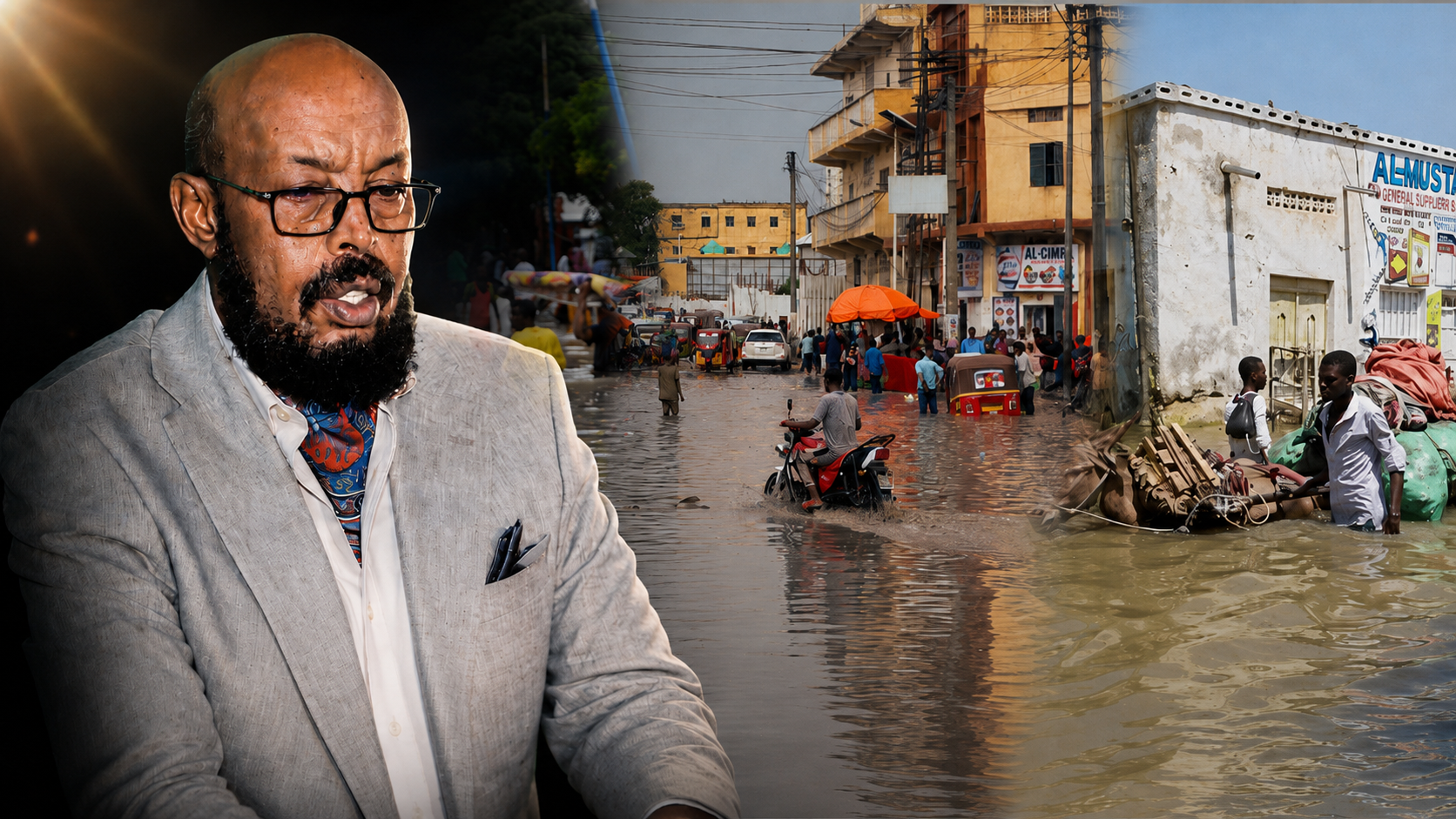

Every rainy season, Mogadishu experiences the same challenge. Roads become rivers, neighbourhoods are cut off, vehicles break down, businesses close, and residents struggle to carry on with their daily activities. Schools sometimes suspend lessons, markets become inaccessible, and emergency services find it difficult to reach those in need. A few hours of heavy rainfall can bring the capital city to a standstill.
Rain itself is not the problem. In fact, rain is a blessing and an important source of water in a country that regularly experiences droughts and water shortages. The real problem lies in the city’s poor drainage and sewage systems, which are unable to handle heavy rainfall.
In many parts of Mogadishu, rainwater accumulates because drains are either absent, poorly designed, blocked by waste, or have not been maintained for years. Streets become temporary lakes where water remains for days. This situation creates not only inconvenience but also serious public health and sanitation concerns.
One practical measure that local authorities can adopt is the use of draining lorries equipped with powerful pumps to suck accumulated water from flooded areas. Each district administration should maintain a number of such vehicles that can be deployed immediately after heavy rainfall.
The concept is simple. Instead of waiting for floodwaters to evaporate naturally, authorities can remove the water quickly and discharge it into designated drainage points or retention areas. This approach may not solve the entire drainage problem, but it can significantly reduce the period during which neighbourhoods remain flooded and economic activities remain disrupted.
Many cities around the world use pumping trucks and mobile drainage systems during emergencies. Such interventions help keep roads open, protect homes and businesses, and reduce health hazards. Mogadishu can adapt these practical solutions according to its circumstances and resources.
The health implications of stagnant water should never be underestimated. Floodwater often mixes with sewage, household waste, and contaminated materials. Children are particularly vulnerable because they often play in flooded streets, exposing themselves to various diseases.
Stagnant water also becomes an ideal breeding ground for mosquitoes. Increased mosquito populations can lead to outbreaks of vector-borne diseases and create additional health burdens for communities. Floodwaters can also contaminate wells and water storage containers, increasing the risk of water-borne illnesses such as diarrhoea and other infections.
Sanitation is equally important. Poor waste disposal practices worsen flooding. Plastic bags, bottles, and other rubbish frequently block drainage channels and natural water pathways. Even a relatively small amount of waste can prevent water from flowing properly.
The solution therefore requires collective responsibility. Local authorities have a duty to improve infrastructure and emergency response systems. At the same time, residents have a responsibility to keep their surroundings clean and avoid dumping waste into drainage channels.
District administrations should establish dedicated rainy-season preparedness committees. These committees can identify flood-prone areas, prepare emergency response plans, and coordinate the deployment of drainage lorries and other equipment. Community volunteers can also assist in monitoring blocked drains and reporting problems before they become severe.
Public awareness campaigns are equally necessary. Residents should understand that every plastic bag thrown onto the street may eventually contribute to flooding. Schools, community leaders, religious leaders, and civil society organisations can play an important role in educating the public about environmental cleanliness and responsible waste disposal.
Long-term planning is also essential. Mogadishu has grown rapidly over the past two decades. The city’s population has increased substantially, and new neighbourhoods have emerged, often without adequate drainage systems. Urban planning must therefore become an integral part of future development.
Road construction projects should include proper drainage channels. New housing developments should consider water flow patterns and avoid obstructing natural waterways. Investment in underground drainage systems may require considerable resources, but the economic and social costs of repeated flooding are even greater.
The private sector can also contribute. Businesses have a direct interest in keeping the city functional during rainy seasons. Public-private partnerships could support the purchase of drainage equipment, maintenance of drainage channels, and emergency response initiatives.
Climate change further reinforces the need for preparedness. Scientists warn that extreme weather events are becoming more frequent in many parts of the world. Somalia is already experiencing cycles of severe drought followed by intense rainfall and flooding. Urban resilience can no longer be viewed as a luxury; it is a necessity.
A modern capital city cannot afford to shut down whenever it rains. Rain should nourish the city rather than paralyse it. Through practical interventions such as district-based drainage lorries, improved sanitation practices, community participation, and long-term infrastructure investment, Mogadishu can transform its relationship with seasonal rains.
The annual flooding witnessed in the capital is not an unsolvable problem. It requires planning, commitment, and cooperation between authorities and residents. Every district that succeeds in managing floodwaters quickly protects public health, safeguards economic activities, and improves the quality of life of its citizens.
Rain is a natural blessing. With proper drainage and sanitation measures, Mogadishu can ensure that rainy days become symbols of renewal and prosperity rather than disruption and hardship.
Mohamed Mohamoud Adde is an academic and a geopolitical analyst