

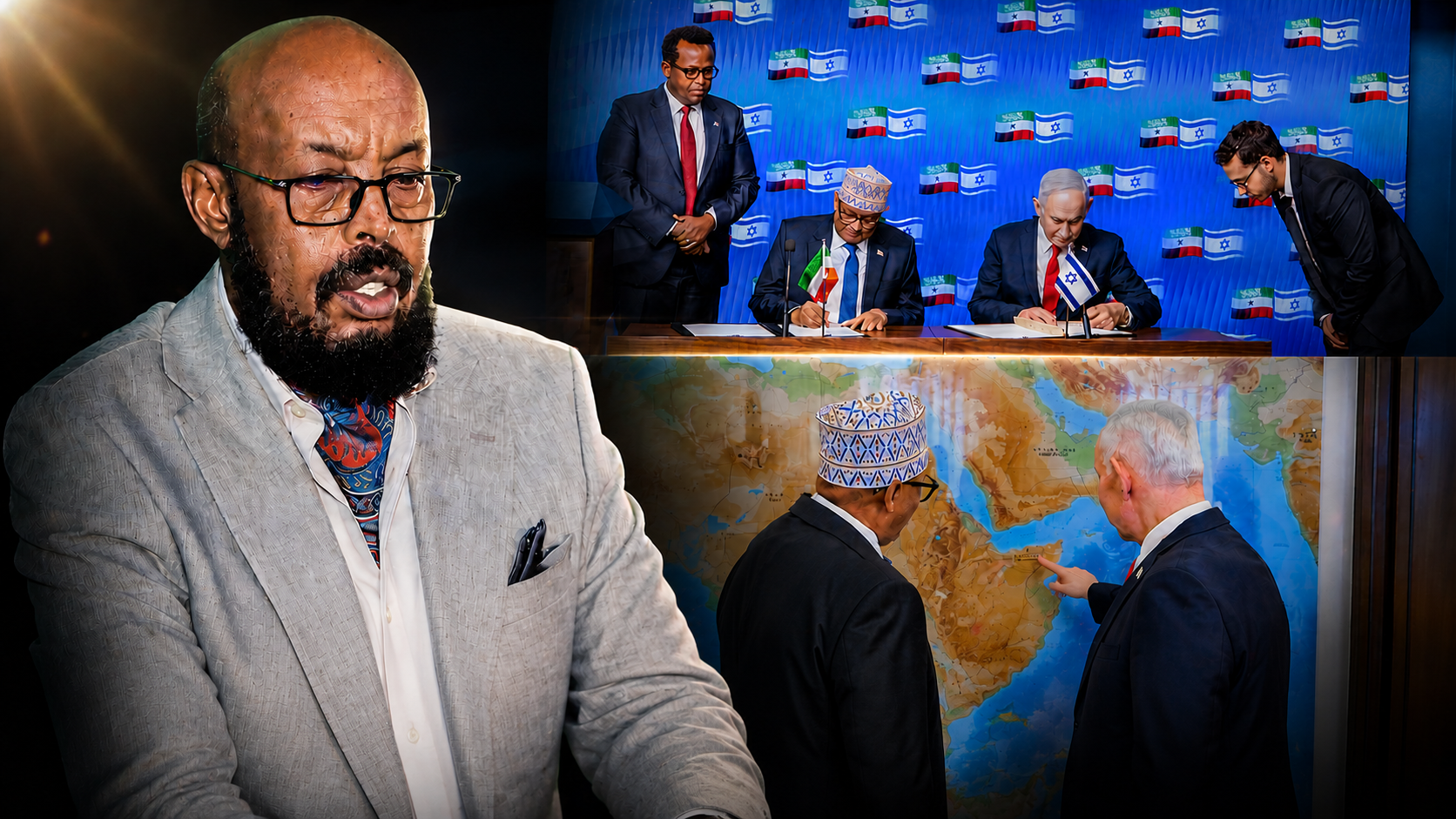

The discussion surrounding possible diplomatic relations between Somaliland and Israel has increasingly attracted regional attention, media debate, and political speculation. While some may attempt to frame the issue through legal arguments, the matter appears to be far more political than legal, involving questions of legitimacy, internal cohesion, diplomacy, and regional security.
At its core, the discussion raises an important question: can a politically sensitive diplomatic move succeed without broad domestic consensus? In societies shaped by historical grievances, clan balance, and negotiated coexistence, major political decisions often carry consequences beyond international headlines.
Somaliland has operated as a de facto administration since 1991 with functioning institutions, elections, and security structures. However, despite its internal governance, it remains internationally regarded as part of Somalia and has not secured formal recognition as an independent state. Consequently, foreign policy decisions involving controversial diplomatic relationships are unlikely to be viewed simply as administrative matters; they inevitably become politically charged.
Perhaps the most overlooked dimension in this discussion concerns internal cohesion. Somaliland, like the wider Somali society, is built upon delicate political understandings between communities and clans. While some may support greater international engagement through independent diplomacy, others may see relations with Israel as politically, culturally, or historically unacceptable and dangerous.
For some communities, such a diplomatic initiative may be interpreted as a strategic political miscalculation. Yet, it may generate discomfort or resistance based on historical solidarity with Palestinians, religious sensitivities, or concerns about wider regional consequences. In deeply traditional societies, perception often matters as much as policy.
More importantly, clans cohesion could be affected if controversial diplomatic decision is perceived as lacking broad consultation. Political stability in Somali societies has historically depended not merely on formal institutions but on consensus-building, negotiation, and inclusion among different social groups. When sensitive matters emerge without sufficient dialogue, there is always a risk of political polarisation.
This concern becomes even more relevant because Somaliland itself is not politically homogeneous. Some clans and communities within the region already oppose the political direction of separation from Somalia, while others maintain reservations regarding unilateral decisions on major national questions. In such an environment, diplomacy can not be divorced from domestic legitimacy.
Another factor that deserves educational reflection is regional security. Yemen lies only a short distance across the Gulf of Aden, and instability there has increasingly shaped security calculations throughout the Horn of Africa. The Houthi movement in Yemen has repeatedly expressed hostility toward Israel and has targeted Israeli-linked shipping in the Red Sea and Gulf of Aden during periods of regional conflict.
In this context, some political observers may argue that visible Israeli involvement in Somaliland affairs could be viewed unfavourably by the Houthis, potentially increasing political sensitivities or security concerns near strategic maritime routes. Such concerns are not necessarily about immediate military consequences but rather about how regional actors perceive political alignments in an already volatile environment. The Red Sea and Bab al-Mandab corridor remain strategically sensitive waterways affected by tensions involving Yemen, Israel, and broader Middle Eastern rivalries.
The Federal Government of Somalia is also likely to respond through diplomatic channels. Somalia currently holds a non-permanent seat on the United Nations Security Council, providing Mogadishu with increased diplomatic visibility. In such circumstances, the Somali government would likely emphasise internationally recognised principles of sovereignty and territorial integrity rather than resort to political confrontation.
This would not be unusual in global politics. States facing contested territorial questions often frame disputes through constitutional legitimacy and recognised borders. Somalia may seek diplomatic support from regional and international partners while reiterating that external relations remain the constitutional responsibility of the federal state.
At the same time, the Somali government faces its own political calculations. Managing sensitive issues involving Somaliland often requires balancing constitutional positions with broader national reconciliation efforts. Excessive political escalation can sometimes deepen divisions rather than encourage dialogue.
Ultimately, the question of Somaliland engaging diplomatically with Israel is unlikely to be determined by legal arguments alone. The debate rests heavily upon politics, domestic consensus, clan cohesion, regional security perceptions, and public legitimacy. Political decision of this nature is rarely judged solely on international calculations; It is also measured by how it affects social harmony at home.
The greatest lesson for Somali societies may be that sustainable political decisions emerge from consultation rather than speed. Issues touching identity, diplomacy, and collective memory often demand patience and dialogue. In the end, political maturity is not demonstrated by how quickly controversial decisions are made but by how carefully communities are included in shaping them.
Mohamed Mohamoud Adde is an academic and a geopolitical analyst