

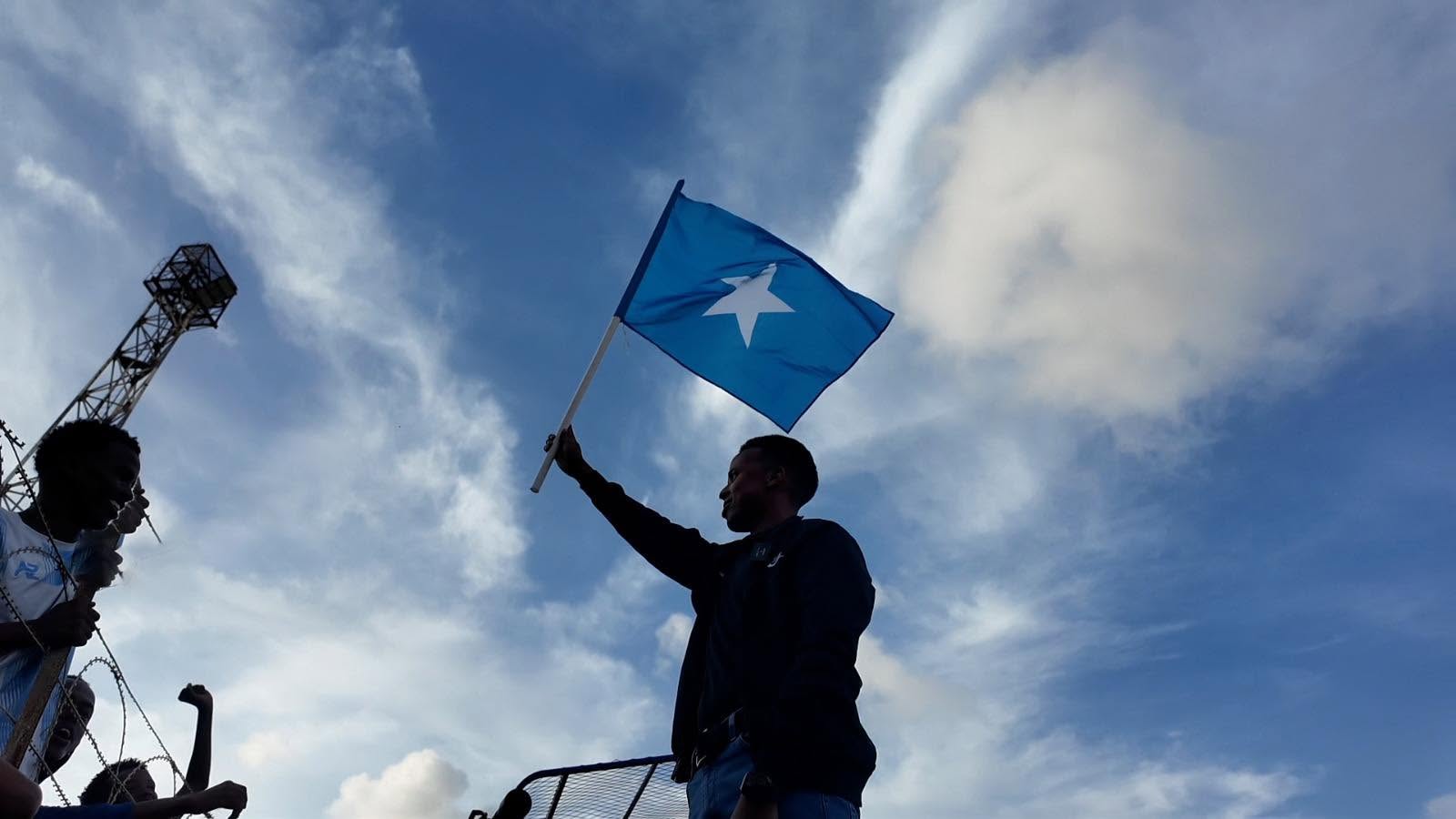

The scenes at Mogadishu Stadium were remarkable. Nearly 30,000 football supporters gathered to welcome Somali international referee Omar Abdulkadir Artan following his unexpected exclusion from officiating at the FIFA World Cup. The reception reflected both admiration for his professional achievement and disappointment over circumstances that prevented him from participating in one of football’s most prestigious global events.
The atmosphere inside the stadium was filled with national pride and appreciation. Supporters, sports officials, young football enthusiasts, and ordinary citizens came together to honour a man who had already secured a place in Somali sporting history by becoming the first Somali referee selected to officiate at a FIFA World Cup. For many observers, the occasion demonstrated that public recognition is not solely reserved for victory, but also for professionalism, perseverance, and national representation.
Omar Artan’s appointment to the World Cup had been widely celebrated before the tournament began. Recognized by the Confederation of African Football (CAF) as Africa’s best male referee in 2025, he had steadily built an international reputation for competence, discipline, and professionalism. His selection by FIFA was therefore regarded as a milestone not only in his personal career but also for Somali sport more broadly.
However, the anticipated historic moment took an unexpected turn when Artan was denied entry into the United States after arriving at Miami International Airport, despite travelling with a valid visa and FIFA accreditation. Following several hours of detention, he was returned to Istanbul and was subsequently unable to participate in the tournament. FIFA later confirmed that immigration matters remained under the authority of the host country and that he would no longer be part of the World Cup officiating team.
The reasons behind the decision quickly became the subject of international discussion. Initially, United States officials referred generally to “vetting concerns.” Subsequent statements from officials in the Trump administration indicated that additional screening had raised concerns regarding alleged associations with individuals suspected of involvement in extremist groups. No publicly detailed evidence was released to support the allegations. Omar Artan strongly rejected the claims and maintained that he had travelled with the proper documentation and had expected to fulfil his professional responsibilities at the tournament.
The incident immediately attracted significant international media attention because it raised broader questions regarding the relationship between sport, politics, and immigration policy. Football, particularly the FIFA World Cup, is often presented as a universal platform where merit, professionalism, and sporting excellence transcend borders and political divisions. FIFA itself consistently promotes football as a vehicle for unity, inclusion, and equal participation.
Yet, throughout history, global sporting events have repeatedly intersected with political realities. Visa restrictions, diplomatic disputes, sanctions, and national security considerations have all influenced participation in major competitions. The case of Omar Artan has therefore prompted renewed debate about whether international sport can ever remain entirely separate from politics.
Some observers argue that when an official has been selected through FIFA’s rigorous qualification process, host countries should facilitate participation unless there is clear and transparent evidence of wrongdoing. Others contend that sovereign nations retain the right to apply immigration and security measures regardless of an individual’s sporting role or international status. These differing perspectives illustrate the complexity of balancing national security concerns with the ideals of global sporting inclusion.
Within Somalia, however, the public response focused less on controversy and more on recognition. Rather than allowing disappointment to dominate the national conversation, thousands gathered at Mogadishu Stadium to celebrate Omar Artan’s achievement. The reception sent a clear message that his professional success remained meaningful regardless of the outcome.
Equally significant was the role played by the Somali government as a national institution. Senior government officials ensured that Omar Artan returned home with dignity and recognition rather than silence. President Hassan Sheikh Mohamud and Prime Minister Hamza Abdi Barre publicly welcomed and praised the Somali referee, recognizing his contribution to Somali sport and his representation of the country on the international stage.
The symbolic importance of this response should not be underestimated. Governments often celebrate sporting success when medals are won or trophies lifted. In this instance, Somalia’s leadership chose to recognize professionalism and effort despite disappointment, reinforcing the idea that achievement is not solely measured by final outcomes.
Standing before supporters at Mogadishu Stadium, Omar Artan responded calmly and with dignity. Rather than focusing on frustration, he expressed gratitude for the public support he had received and encouraged Somali youth to remain committed to their ambitions. His response reflected resilience and professionalism, qualities that many supporters had already come to associate with his career.
Ultimately, the story surrounding Omar Artan extends beyond one football tournament. It raises questions about fairness, opportunity, national sovereignty, and the increasingly complicated relationship between global sport and political realities. Whether viewed as an unfortunate immigration decision or as an example of sport becoming increasingly politicised, the incident has generated debate well beyond Somalia.
What remains clear, however, is that Omar Artan returned home to overwhelming public appreciation. The reception at Mogadishu Stadium demonstrated how a sporting figure can become a symbol of national pride not only through participation but also through the manner in which challenges are confronted. The standing ovation from thousands of supporters reflected recognition of professional achievement, dignity, and perseverance in the face of disappointment.
Mohamed Mohamoud Adde is an academic and a geopolitical analyst