

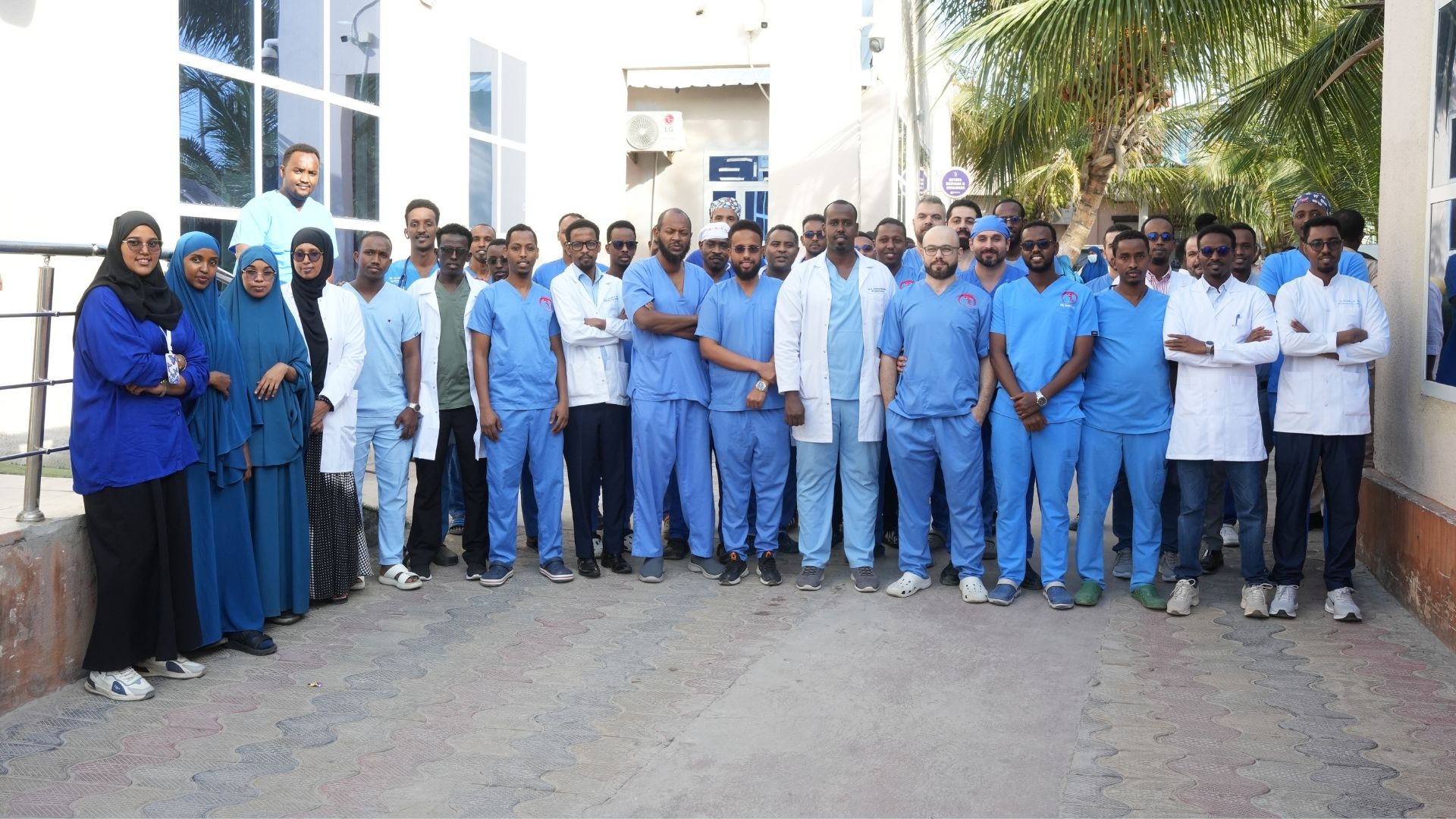

Kalkaal Hospital stands today as one of Mogadishu’s most respected private medical institutions, a symbol of resilience, professionalism, and hope in a city that has endured decades of hardship. For the past ten years, Kalkaal has been quietly but consistently transforming healthcare delivery in Somalia’s capital, offering world-class medical services in an environment defined by compassion, dignity, and trust. Its journey is not merely the story of a hospital, but of a national success in rebuilding confidence in local healthcare.
From its early days, Kalkaal Hospital set out with a clear vision: to provide comprehensive, high-quality medical care that meets international standards while remaining deeply rooted in the needs and realities of Somali society. Over the last decade, that vision has become a reality. The hospital now hosts a diverse team of highly qualified Somali and foreign doctors, specialists, nurses, and healthcare professionals, working together across more than twenty medical fields. This multidisciplinary strength allows Kalkaal to address both common and highly complex medical conditions under one roof.
One of the hospital’s greatest achievements is its breadth of specialties. From pediatrics, obstetrics and gynecology, internal medicine, and general surgery to more advanced fields such as neurology, neurosurgery, cardiology, orthopedics, urology, and critical care, Kalkaal has become a referral center for patients across Mogadishu and beyond. Many families who once felt compelled to seek treatment abroad now find the same level of expertise and care at home, saving them enormous financial, emotional, and physical strain.
The pediatric department, in particular, has earned the trust of countless Somali families. Children are treated not only with medical expertise but with patience, warmth, and sensitivity that reassures anxious parents. Pediatricians at Kalkaal understand that treating a child means supporting an entire family, and this philosophy is evident in their approach. Similarly, the maternity and women’s health services have played a crucial role in improving maternal care, offering safe deliveries, prenatal and postnatal services, and specialist gynecological care in a secure and respectful environment.
Kalkaal’s neurology and neurosurgery services stand as another major pillar of its reputation. In a context where such specialized care has long been scarce, the presence of experienced neurologist and neurosurgeon— Somali doctors with international expertise —has been life-changing for many patients. Conditions that once went undiagnosed or untreated are now managed with precision, using modern diagnostic tools and evidence-based medical practices. For patients and families, this has meant not only better health outcomes but renewed faith in Somalia’s healthcare capacity.
Beyond technical excellence, what truly sets Kalkaal Hospital apart is its human atmosphere. From the moment patients enter the facility, they are met with a sense of calm, order, and friendliness that is often rare in high-pressure medical settings. The staff, from receptionists to senior consultants, treat patients with respect and empathy, recognizing the vulnerability that accompanies illness. This culture of care has helped build deep trust between the hospital and the community it serves.
The hospital’s management has also invested heavily in creating a clean, safe, and well-organized environment. Modern equipment, well-maintained wards, and strict hygiene standards reflect Kalkaal’s commitment to patient safety and comfort. At the same time, the hospital remains accessible and culturally sensitive, ensuring that patients from different backgrounds (rural or urban) feel understood and respected.
Another remarkable strength of Kalkaal Hospital is its role in knowledge exchange and professional development. The collaboration between Somali and foreign doctors has created a rich learning environment, where local professionals gain exposure to international best practices while foreign specialists deepen their understanding of Somali health needs and contexts. This mutual exchange contributes to long-term capacity building in the Somali health sector, extending Kalkaal’s impact far beyond its own walls.
Over the past ten years, tens of thousands of Somali patients have directly benefited from Kalkaal’s services. Behind each statistic lies a human story: a child recovering from illness, a mother safely delivering her baby, a patient regaining mobility, or a family finding answers after years of uncertainty. These stories collectively explain why Kalkaal Hospital is spoken of with respect and gratitude across Mogadishu.
In a country where rebuilding institutions is both a challenge and a necessity, Kalkaal Hospital represents what is possible when professionalism, dedication, and compassion come together. It is not simply a private hospital; it is a national asset that has contributed to restoring dignity and confidence in local healthcare. As it enters its second decade of service, Kalkaal stands well-positioned to continue expanding its specialties, investing in innovation, and serving the Somali people with the same commitment that has defined its first ten years.
In every sense, Kalkaal Hospital embodies a friendly, patient-centered, and forward-looking approach to medicine—one that has already changed countless lives and continues to offer hope for a healthier future in Mogadishu and beyond.
Mohamed mohamoud Adde is
an academic and a political analyst