

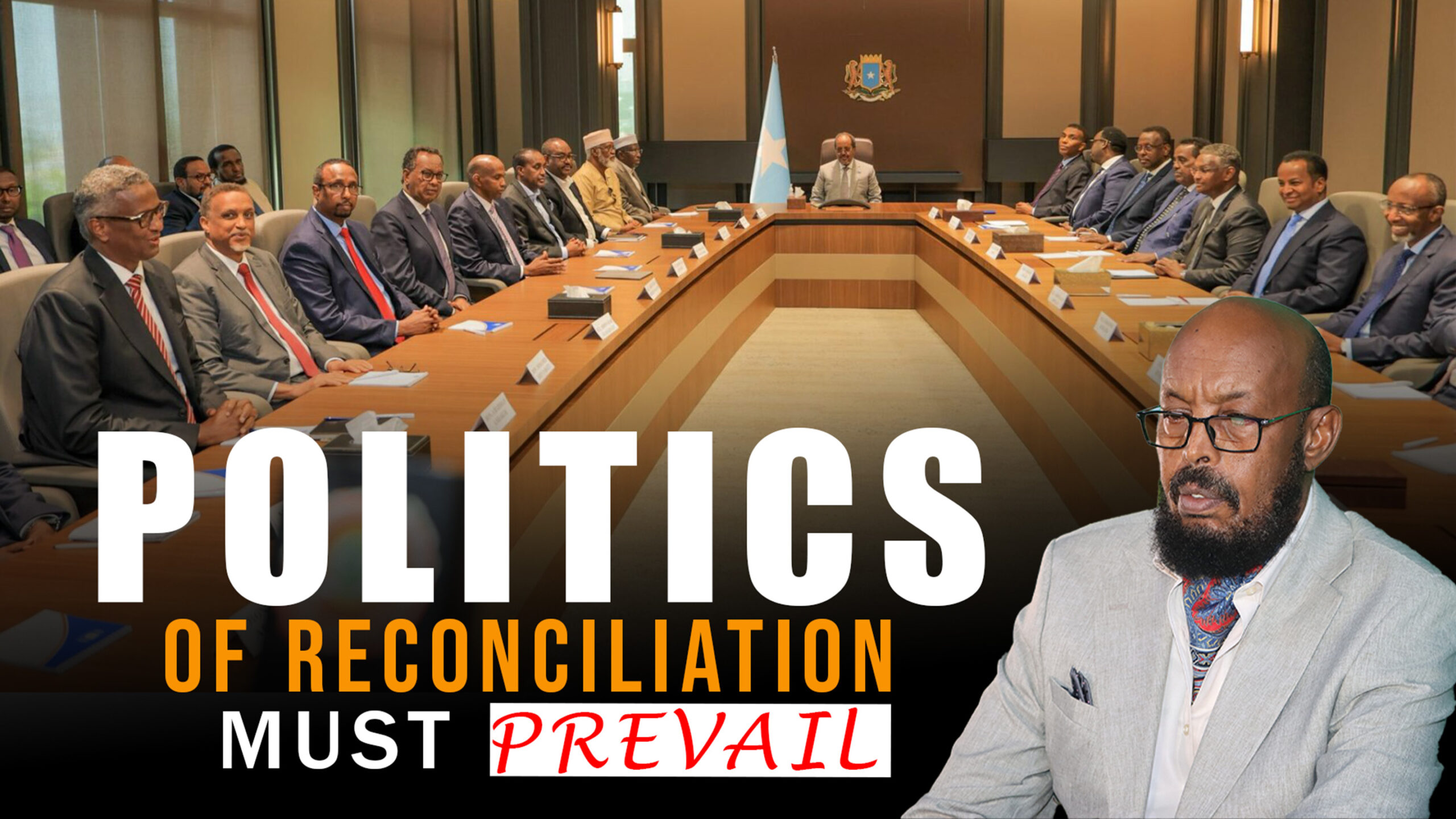

The statement issued by the Council for Somalia’s Future marks an important and constructive development in Somalia’s political landscape. Coming only weeks after violent confrontations between opposition groups and government forces, the council’s latest declaration adopts a noticeably conciliatory tone and offers an opportunity to de-escalate tensions and return political competition to the negotiating table.
The council stated that it seeks to move the country out of its “political deadlock” and to achieve “an inclusive election that is consensual and enjoys both legal legitimacy and political confidence.” Such language deserves recognition and encouragement. Somalia has endured decades of conflict, political instability, and periodic crises. Any political actor that advocates dialogue, compromise, and peaceful resolution of disputes is making a valuable contribution to the country’s democratic development.
Particularly noteworthy is the council’s acknowledgement that its proposal is based on “political compromise and consideration for the Somali people, who are eager for a swift resolution to the electoral dispute.” This statement reflects an important reality. Ordinary Somalis are tired of recurring political crises. They wish to see their leaders resolve differences through negotiation rather than confrontation. The public’s aspirations are centred on security, economic opportunity, education, and national unity, not political violence.
The opposition’s proposal also recognises the principle that Somali citizens should have the opportunity to “freely and directly elect their representatives” while preserving the existing power-sharing arrangements during the transition period. Whether one agrees or disagrees with the specific electoral formula, the willingness to discuss practical compromises demonstrates political maturity. In democratic societies, disagreement is normal. What matters is how those disagreements are managed.
Equally significant is the council’s call for dialogue. It declared its readiness to present the details and implementation procedures of its electoral proposal when formal political talks are convened. This commitment to negotiation should be welcomed by all stakeholders. No election system can succeed unless it enjoys broad political acceptance and public confidence.
The government and opposition inevitably have different perspectives regarding electoral arrangements. Such differences should not be interpreted as hostility toward the state itself. Responsible opposition is an essential component of democratic governance. It provides alternative viewpoints, scrutinises government decisions, and represents constituencies that may feel unheard. At the same time, opposition groups carry a heavy responsibility to pursue their objectives through peaceful means and constitutional mechanisms.
Likewise, governments have an obligation to create political space for dialogue and dissent. Durable solutions rarely emerge from unilateral actions or force. They are usually the product of patient negotiations, concessions, and an understanding that national interests transcend partisan calculations.
Political maturity is demonstrated when leaders recognise that today’s rivals may become tomorrow’s partners in governance. Stable democracies are built not on the absence of disagreement but on the ability to manage differences peacefully through institutions. Strong institutions, respect for the rule of law, and peaceful transfers of political authority create predictability and confidence among citizens and investors alike.
Somalia’s future prosperity is directly linked to political stability and peace. The Somali diaspora possesses enormous financial resources, skills, and entrepreneurial experience. Many members of the diaspora are willing to invest in their homeland, establish businesses, and transfer knowledge. Likewise, foreign investors are increasingly looking at Africa’s emerging markets. However, investment flows to countries that demonstrate stability, political maturity, and institutional strength.
When political actors choose dialogue over confrontation, they send a powerful signal that Somalia is becoming a more predictable and secure destination for investment. New investments can stimulate economic growth, create employment opportunities, improve infrastructure, and expand opportunities for young people. Given Somalia’s youthful population, job creation is not merely an economic necessity but also a national security imperative. Young people who have access to education, employment, and economic opportunities are more likely to become stakeholders in peace and development.
The Somali people would undoubtedly prefer vigorous political debate and competitive elections over political violence. Elections can divide opinions, but they also provide peaceful channels through which competing visions of governance can be contested. Violence, on the other hand, destroys trust, discourages investment, interrupts economic activity, and deepens social divisions.
Somalia’s history offers painful lessons about the costs of political conflict. Those lessons should encourage all political actors to choose reconciliation over confrontation. The latest statement from the Council for Somalia’s Future presents an opportunity to lower political temperatures and renew dialogue. It may not resolve every disagreement, and its proposals will certainly be debated, but its conciliatory tone deserves commendation.
The path forward lies in replacing suspicion with dialogue and replacing political confrontation with political competition. Somalia needs a responsible government and a responsible opposition, both committed to peace, compromise, and national reconciliation. Stability, political maturity, and strong institutions can unlock the country’s economic potential, attract diaspora and foreign investment, create jobs for the youth, and lay the foundations for a peaceful and prosperous Somalia.
Mohamed Mohamoud Adde is an academic and a geopolitical analyst