

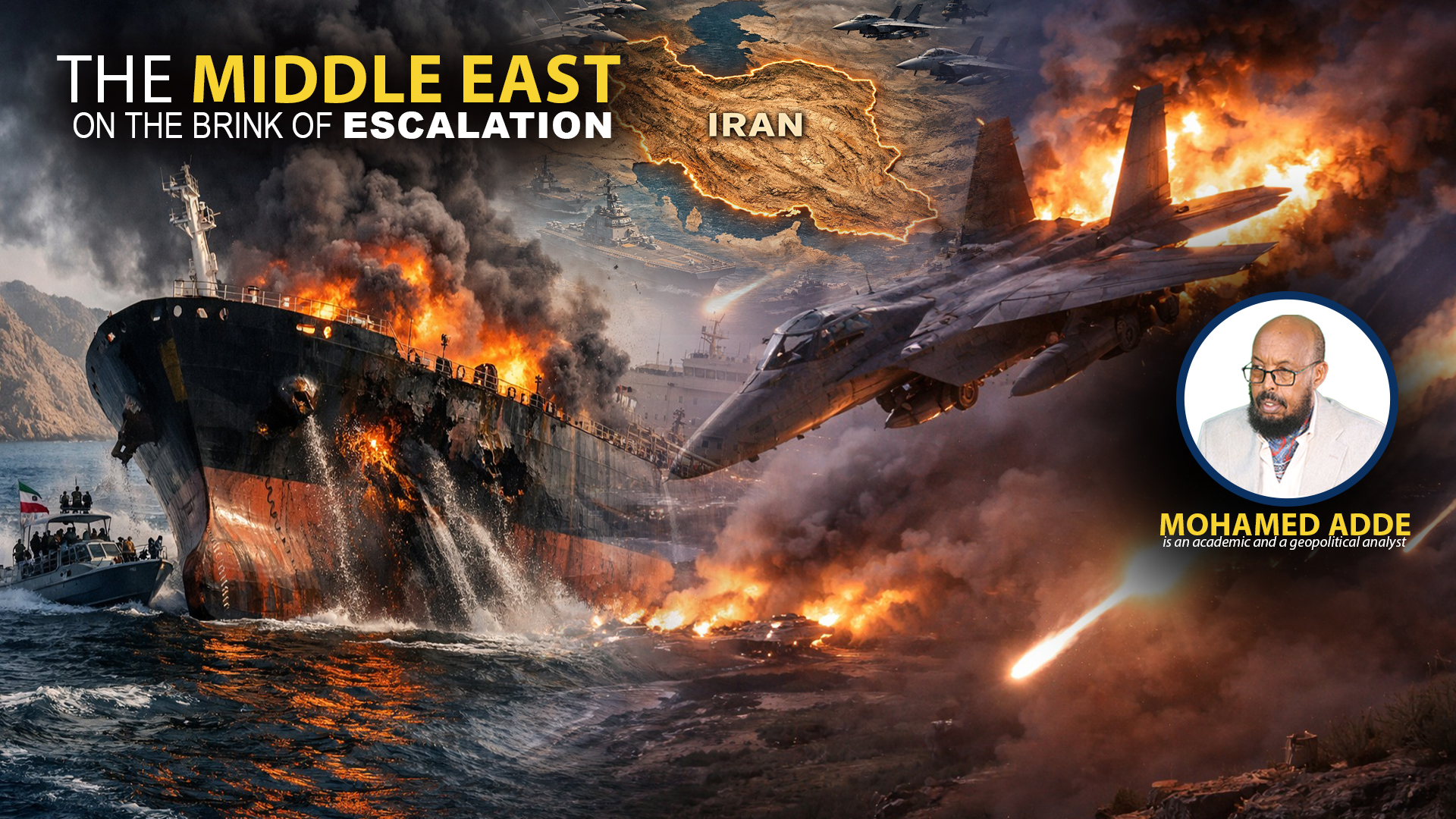

The fragile ceasefire between the United States and Iran appears to have collapsed, plunging the Middle East back into one of its most dangerous confrontations in decades. Fresh American airstrikes, Iranian missile retaliation, and increasingly uncompromising rhetoric from both governments have raised fears that the region may be approaching a full-scale war whose consequences would extend far beyond the Gulf.
While the military events are largely undisputed, the interpretation of those events differs dramatically depending on which side tells the story.
According to American officials and much of the U.S. press, the latest round of strikes was a direct response to Iranian attacks on commercial shipping in the Strait of Hormuz and threats against U.S. interests in the Gulf. Washington argues that its objective is to restore deterrence, protect international navigation, and prevent further Iranian military escalation rather than begin a prolonged war. President Donald Trump has warned Tehran that further attacks would trigger even stronger military action, while leaving open the possibility of negotiations if Iran changes course.
Iranian officials and state media present a fundamentally different account. Tehran maintains that the United States violated the ceasefire first by launching new attacks on Iranian territory. Iranian newspapers describe the American operation as an illegal act of aggression and portray Iran’s missile and drone strikes as legitimate self-defence. Officials insist that negotiations cannot continue while Iran is under military attack and warn that any country assisting U.S. operations risks becoming a target.
These opposing narratives reveal more than a disagreement over military events. They reflect two fundamentally different strategic worldviews.
For Washington, the central issue is maintaining freedom of navigation through one of the world’s most important energy corridors while limiting Iran’s regional influence. For Tehran, the conflict is portrayed as resistance against foreign intervention and a defence of national sovereignty. Each government therefore presents itself as reacting to aggression rather than initiating it.
Despite these differences, both sides appear to be pursuing a strategy of calibrated escalation. Neither has formally declared war, yet both continue to exchange increasingly powerful military blows. History shows that such limited conflicts are inherently unstable. A single successful missile strike causing heavy casualties, an attack on civilian infrastructure, or the sinking of a major commercial vessel could rapidly transform a controlled confrontation into an open regional war.
The strategic implications extend far beyond Iran and the United States.
The Strait of Hormuz carries roughly one-fifth of globally traded oil. Any prolonged disruption could send energy prices sharply higher, fuel inflation across the world, and slow global economic growth. Shipping companies are already reassessing routes, insurers are increasing premiums, and financial markets are reacting nervously to each new military exchange.
A broader conflict would also place neighbouring states in an extremely difficult position. Gulf countries hosting American military facilities could become direct targets for Iranian retaliation. Israel would likely remain deeply involved, while armed groups allied with Iran across Iraq, Lebanon, Syria and Yemen could open additional fronts. Such a scenario would transform a bilateral confrontation into a regional war stretching across the Middle East.
The humanitarian consequences would be severe. Previous conflicts have demonstrated how quickly civilian infrastructure—including hospitals, electricity networks, ports and transport systems—can become casualties of prolonged warfare. Millions of civilians could face displacement, while international humanitarian organisations would struggle to deliver assistance amid continuing hostilities.
Diplomatic efforts have not entirely disappeared. Regional mediators continue to seek ways to restore dialogue, recognising that neither Washington nor Tehran is likely to achieve a decisive military victory without paying an enormous political and economic price. Yet diplomacy becomes increasingly difficult each time missiles are launched and casualties mount.
Whether this crisis develops into a full-scale war depends largely on decisions made in the coming days. If both governments continue to respond militarily to every new incident, the chances of miscalculation will grow significantly. If, however, they choose to separate military signalling from political negotiations, the present confrontation could still be contained.
The competing narratives promoted by American and Iranian media illustrate how modern conflicts are fought not only on battlefields but also in the information space. Each side seeks to convince domestic and international audiences that it is acting defensively while portraying the other as the aggressor. Amid these conflicting accounts, one fact remains beyond dispute: another major war in the Middle East would carry devastating human, economic and geopolitical consequences that neither side could fully control.
Mohamed Mohamoud Adde is an academic and a geopolitical analyst