

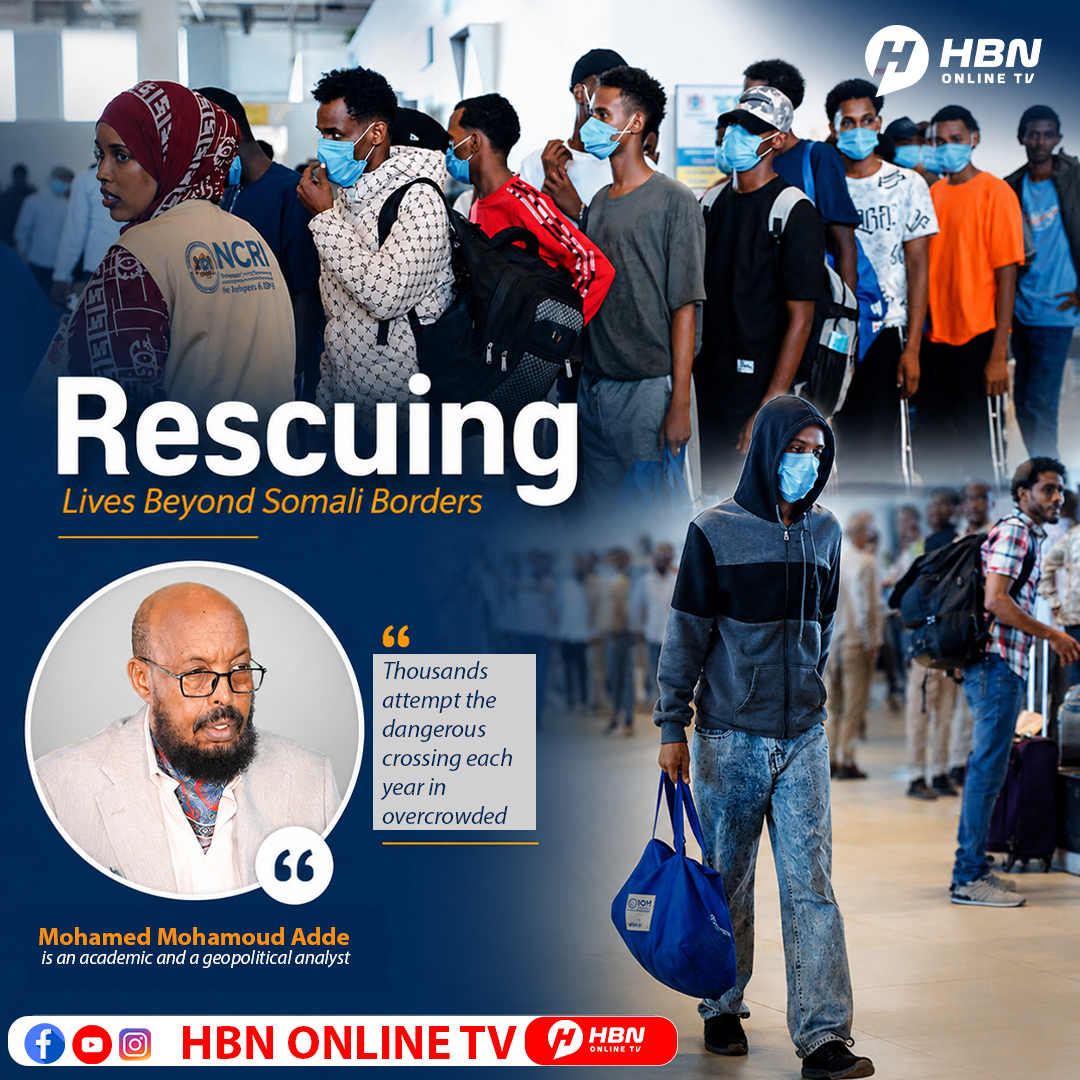

The return of 129 Somali citizens from Libya marks another significant humanitarian achievement for the Federal Government of Somalia. More importantly, it serves as a reminder of the immense human cost of irregular migration and the urgent need to educate young people about the realities that await many migrants along dangerous trafficking routes.
According to the government, the returnees were brought home aboard a special charter flight. Nineteen arrived in Hargeisa, while 110 landed at Aden Adde International Airport in Mogadishu, where they were welcomed by senior government officials, including representatives from the Ministry of Foreign Affairs and the National Commission for Refugees and Internally Displaced Persons. For many families, the arrivals marked an emotional reunion after months of uncertainty, fear, and separation.
The government used the occasion not only to receive the returnees but also to deliver an important public message. Officials urged Somali youth to reject irregular migration and warned them about the severe dangers associated with human smuggling networks that promise opportunity but often deliver suffering, exploitation, and death.
For thousands of young Africans, Libya has become a major transit point on the journey toward Europe. Yet for many Somalis, the dream of reaching Europe ends long before they ever see its shores. Instead, they become victims of criminal trafficking networks that exploit vulnerable migrants for profit.
Many migrants who enter Libya through irregular routes are subjected to arbitrary detention in illegal prisons operated by traffickers or armed groups. Survivors frequently describe overcrowded detention centres, inadequate food and water, physical abuse, torture, and ransom demands made to their families. Loved ones back home are often forced to sell property, borrow money, or incur heavy debts in desperate attempts to secure the release of their relatives.
Those fortunate enough to escape detention still face another deadly challenge: the Mediterranean Sea. Thousands attempt the dangerous crossing each year in overcrowded and poorly maintained boats operated by smugglers who prioritize profit over human life. Many vessels never reach their destination.
The Somali government’s recent rescue efforts highlight both progress and the continuing scale of the crisis. In less than one year, nearly 500 Somali citizens have been successfully repatriated from Libya. Earlier this year, on 23 April 2026, 174 Somalis were brought home, while another 173 returned on 23 September 2025. Most had endured prolonged detention and serious abuse before finally being rescued through coordinated diplomatic and humanitarian efforts.
Unfortunately, not every story has a happy ending.
During the same period, Somalia mourned the deaths of 17 young citizens who lost their lives while attempting to cross the sea between Spain and Algeria. According to official information, the victims included 12 young men and five young women between the ages of 18 and 30. Their dreams of building better futures ended in tragedy.
Another heartbreaking incident occurred on 16 August 2025 when a boat carrying 110 migrants capsized in the Mediterranean Sea between Libya and Italy. Ninety of those aboard were Somalis. Among those confirmed dead were a young girl and her father, illustrating how entire families are increasingly taking enormous risks in pursuit of hope abroad.
Despite these tragedies, migration itself should not be viewed as the problem. Throughout history, people have migrated legally for education, employment, trade, family reunification, and humanitarian protection. Safe and legal migration has contributed to economic growth and cultural exchange around the world.
The real danger lies in irregular migration controlled by organized criminal networks. Human traffickers prey on vulnerable young people by spreading false promises through social media, informal recruiters, and word-of-mouth stories that rarely reveal the harsh realities experienced along the journey. Many migrants begin their travels believing they will reach Europe within weeks, only to find themselves trapped for months or years in situations of violence, exploitation, and uncertainty.
Education remains one of the strongest tools for preventing these tragedies. Schools, universities, religious leaders, parents, community elders, and the media all have important roles to play in informing young people about the genuine risks associated with irregular migration. Awareness campaigns should include testimonies from survivors who can speak honestly about their experiences, helping replace unrealistic expectations with informed decision-making.
At the same time, governments and development partners must continue investing in employment opportunities, vocational training, entrepreneurship, and skills development that provide young people with realistic alternatives at home. When young citizens see pathways to build meaningful futures within their own communities, they are less likely to place their lives in the hands of traffickers.
The Federal Government of Somalia also deserves recognition for strengthening cooperation with international organizations and partner countries to rescue vulnerable citizens abroad. Such operations require sustained diplomatic engagement, logistical coordination, and humanitarian commitment. Every successful repatriation represents not merely a transportation mission but the restoration of hope, dignity, and family unity.
According to the Displacement Tracking Matrix (DTM), 5,435 Somali migrants reached Europe between January and August 2025. They represented approximately four percent of officially recorded African migrants during that period. While some successfully establish new lives abroad, countless others never complete the journey or suffer experiences that leave lasting physical and psychological scars.
The arrival of these 129 Somali citizens should therefore be seen as more than a rescue operation. It is an opportunity for national reflection. Every young person considering irregular migration deserves accurate information before making life-changing decisions. Every family should understand the risks that accompany the promises made by traffickers. Every successful rescue should reinforce the importance of prevention alongside humanitarian response.
Ultimately, the greatest success will not be measured only by the number of citizens rescued from foreign prisons. It will be measured by the number of young Somalis who choose informed, safe, and lawful paths toward achieving their dreams, preserving both their futures and their lives.
Mohamed Mohamoud Adde is an academic and a geopolitical analyst