

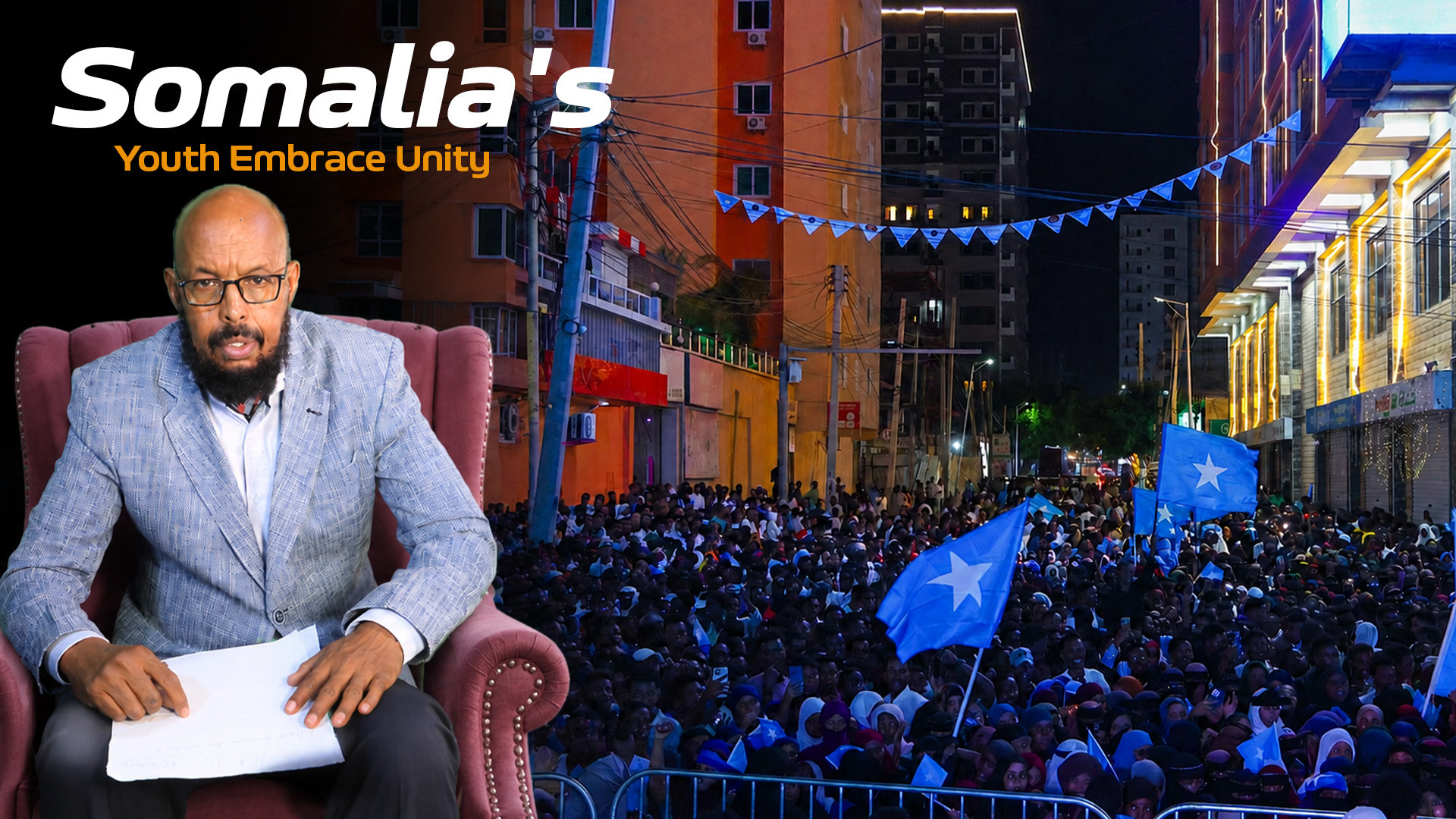

The images that emerged from Mogadishu on Somalia’s 66th Independence and Unity Day were remarkable. Thousands of young men and women flooded the streets, proudly carrying the blue Somali flag while celebrating peacefully alongside President Hassan Sheikh Mohamud. For many observers, the scenes represented far more than a national holiday. They revealed a generation eager to embrace a shared national identity and offered the world a different picture of Somalia.
For decades, much of the international coverage of Somalia has focused on insecurity, humanitarian crises, piracy, political disputes, and terrorism. These are realities that can not be ignored. Yet they do not tell the whole story of a nation whose people continue to demonstrate resilience, patriotism, and hope. The sight of thousands of young people gathering voluntarily under one flag challenged the familiar narrative and reminded the international community that Somalia’s story is also one of unity and determination.
The significance of these celebrations lies in the message conveyed by the youth. Somalia is one of the youngest countries in the world, with a large majority of its population below the age of thirty. Most of these young citizens were born long after the establishment of the Somali Republic in 1960 and after the collapse of the state in 1991. They know the country’s history mainly through books, family memories, and national commemorations. Yet their enthusiastic participation demonstrates that the ideals of independence and unity remain alive.
National celebrations provide more than entertainment. They strengthen civic identity and remind citizens that they belong to something greater than themselves. When thousands of young people wave the same flag, they symbolically place the interests of the nation above regional, clan, or political differences. Such moments reinforce the importance of social cohesion, which remains essential for sustainable peace and development.
The President’s address reflected this aspiration for unity. He urged Somalis to look beyond divisions and work together for a stronger future, declaring, “We must unite our minds, our strength and our collective resolve to safeguard our hard-earned gains and together achieve the lasting prosperity we aspire to.”
This message carries an important educational lesson. Nations are not built by governments alone. They are strengthened by citizens who choose cooperation over conflict, dialogue over division, and service over self-interest. Young people who publicly celebrate their national identity are expressing confidence that Somalia’s future is worth investing in.
Another important feature of this year’s celebrations was the role of social media. Videos and photographs of young Somalis waving the national flag quickly reached audiences across the world. For once, international viewers saw images dominated not by violence but by patriotism, music, and peaceful public participation. In today’s digital age, citizens themselves contribute to shaping their country’s international image. Every positive image shared online becomes part of Somalia’s public diplomacy.
The peaceful nature of the gathering also suggests growing confidence among ordinary citizens. Public participation on such a large scale usually reflects trust that national institutions can organise and protect major public events. Although Somalia continues to face security challenges, successful national celebrations demonstrate that progress is possible when citizens and institutions work together.
International observers may interpret these scenes differently. Some will see them as evidence of improving stability, while others may caution against drawing broad conclusions from a single event. Both views deserve consideration. Nevertheless, peaceful images of thousands of young Somalis celebrating their nation deserve recognition because they balance a narrative that has often overlooked stories of hope and national pride.
Educational institutions should also take note. Schools and universities can use Independence Day as an opportunity to teach students about the struggle for freedom, constitutional development, responsible citizenship, and the importance of national unity. Patriotism is strongest when it is rooted in knowledge, critical thinking, and a commitment to the common good rather than emotion alone.
The celebrations also remind policymakers that patriotic youth require opportunities to fulfil their potential. National pride must be matched with investments in quality education, employment, entrepreneurship, and civic participation. A generation inspired by the national flag should also be empowered to build the nation it proudly celebrates.
Ultimately, the thousands of young Somalis who filled the streets carried more than pieces of blue cloth. They carried a message—to themselves, to their leaders, and to the international community—that Somalia’s future belongs to a generation determined to preserve its unity while building a peaceful and prosperous nation.
History often remembers defining photographs. The image of thousands of Somali youth standing together beneath one flag may one day be remembered not simply as a celebration of Independence Day, but as a symbol of a generation choosing unity, hope and national purpose over division.This version maintains an educational perspective while connecting the celebrations to civic identity, youth engagement and nation-building.
Mohamed Mohamoud Adde is an academic and a geopolitical analyst.