

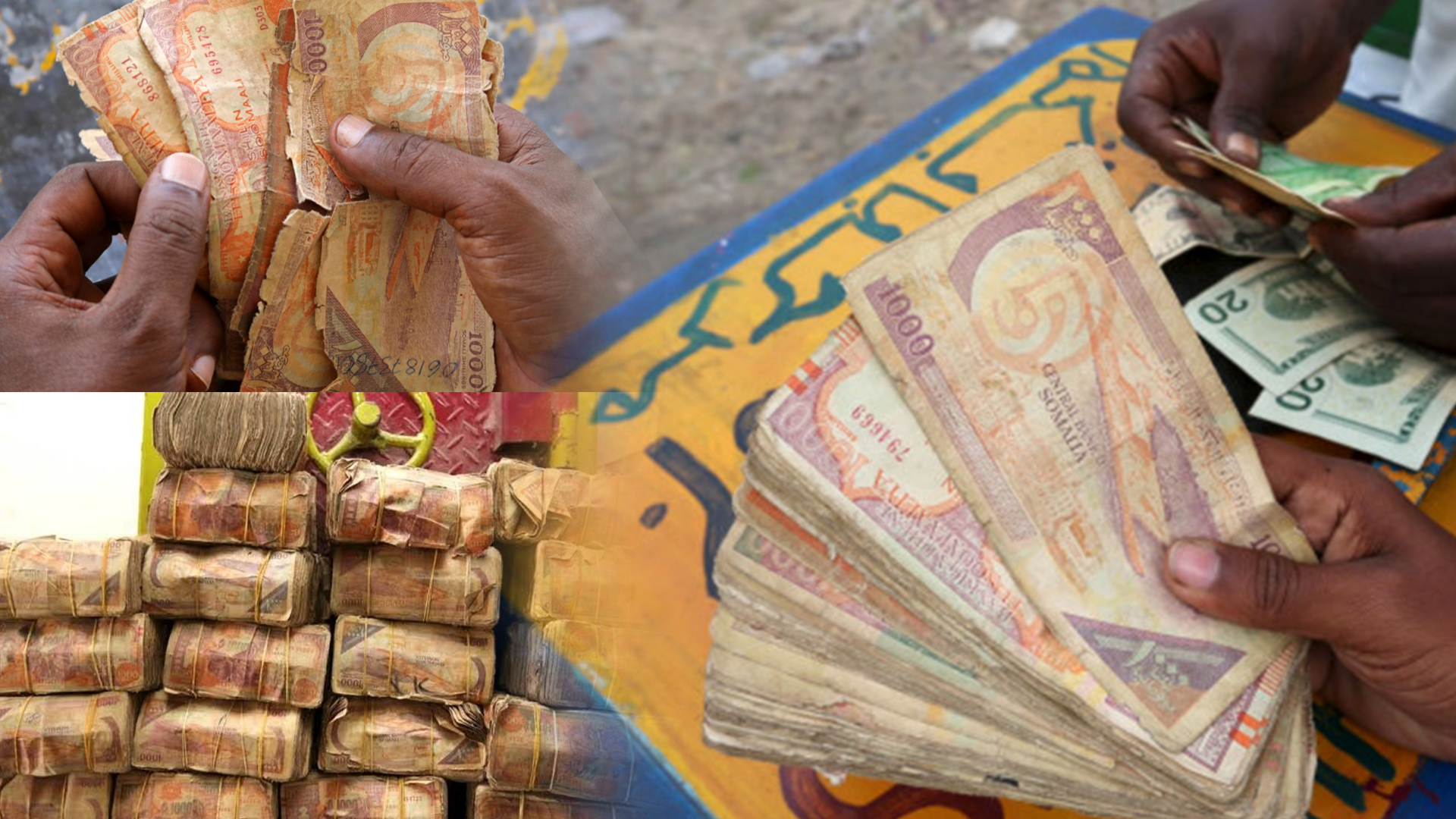

Somalia’s paper currency is, for all practical purposes, dead. The last Somali banknote commonly circulating was the 1,000-shilling note. Curiously, it was both the country’s largest and smallest functioning denomination at the same time. The other banknotes that once formed the Somali monetary system have disappeared, weathered away by conflict, inflation, and decades of institutional disruption.
There was a period when Somalia possessed a complete monetary structure. Various denominations of banknotes and coins were used for salaries, shopping, transport, and savings. The Somali shilling represented national identity and economic sovereignty. However, the collapse of state institutions in 1991 disrupted the management of currency and financial systems. Inflation steadily reduced the purchasing power of the shilling, while new and higher denominations never emerged to keep pace with economic realities.
As paper money lost its value and usefulness, Somalis adapted with remarkable resilience. The US dollar became the preferred currency for major transactions, while the country gradually embraced something even more revolutionary—digital money.
Today, Somalia is arguably one of the world’s most cashless societies. Mobile money has penetrated almost every corner of society. Citizens use their phones to buy food, pay transport fares, settle utility bills, purchase medicine, and transfer funds to relatives and business partners. The mobile phone has effectively become the nation’s wallet.
The transformation is so complete that many businesses now refuse paper money altogether. Customers often hear the phrase, “Send it to my number.” Some shops, restaurants, and service providers no longer keep cash on their premises and accept only digital payments. While this demonstrates confidence in technology, it has also created challenges for the poorest members of society.
Not everyone possesses sufficient digital balances or has uninterrupted access to mobile services. The elderly, displaced persons, and the extremely poor sometimes struggle to participate fully in a system that increasingly assumes everyone has electronic money. A person carrying the few paper notes still in circulation may occasionally find it difficult to purchase goods or services because some businesses simply prefer digital transactions.
Perhaps nothing symbolises Somalia’s digital transformation more vividly than the sight of beggars carrying cardboard signs displaying their mobile phone numbers. In many parts of Mogadishu, people seeking charity no longer ask for paper money. Instead, they ask passers-by to transfer money electronically. The image of a beggar requesting a mobile transfer would have seemed unimaginable a generation ago. Today, it has become an ordinary scene and a powerful illustration of how deeply digital finance has penetrated Somali society.
The most remarkable aspect of this revolution is its inclusiveness. Literacy is not necessarily a barrier. Even people who can not read or write fluently have learned to use simple number combinations and menus on their phones to send and receive money. Market traders, rural communities, and elderly citizens have all embraced mobile payments with surprising ease.
Government institutions have also moved toward digital transactions. Many public servants receive their salaries electronically, often in US dollars. Businesses pay workers digitally, and humanitarian organisations distribute assistance through mobile platforms. Electronic transactions have become the norm rather than the exception.
The advantages are considerable. Digital money is fast, convenient, and relatively secure. People no longer need to carry large sums of cash, reducing the risks of theft and loss. Transactions that once required long journeys can be completed within seconds. Businesses can transfer funds instantly, and families can support relatives in distant regions without physically moving money.
Digital payments also leave electronic records that improve transparency and accountability. Such systems can facilitate taxation, strengthen financial regulation, and reduce opportunities for fraud and corruption.
This reality raises an important question: if Somalia already operates largely without paper money, why not formally introduce a nationally regulated Somali digital currency?
Somalia has already built the social and technological foundations necessary for such a transition. Mobile phone ownership is widespread, telecommunications services are extensive, and the population has become comfortable with electronic payments. A Somali digital currency, supervised by the Central Bank, could coexist with the Somali shilling during a transitional period before eventually replacing paper money entirely.
The country’s paper currency has effectively reached the end of its life. Yet from its decline has emerged as one of Africa’s most innovative financial ecosystems. Rather than attempting to revive dying banknotes, Somalia should embrace its new reality and build a secure, simple, and nationally managed digital currency.
The future of Somali money is already visible on every street corner—in businesses that prefer mobile payments and even in the cardboard signs of beggars displaying their phone numbers. Somalia is not waiting for the digital age. It is already living in it.
Mohamed Mohamoud Adde is an academic and a geopolitical analyst