

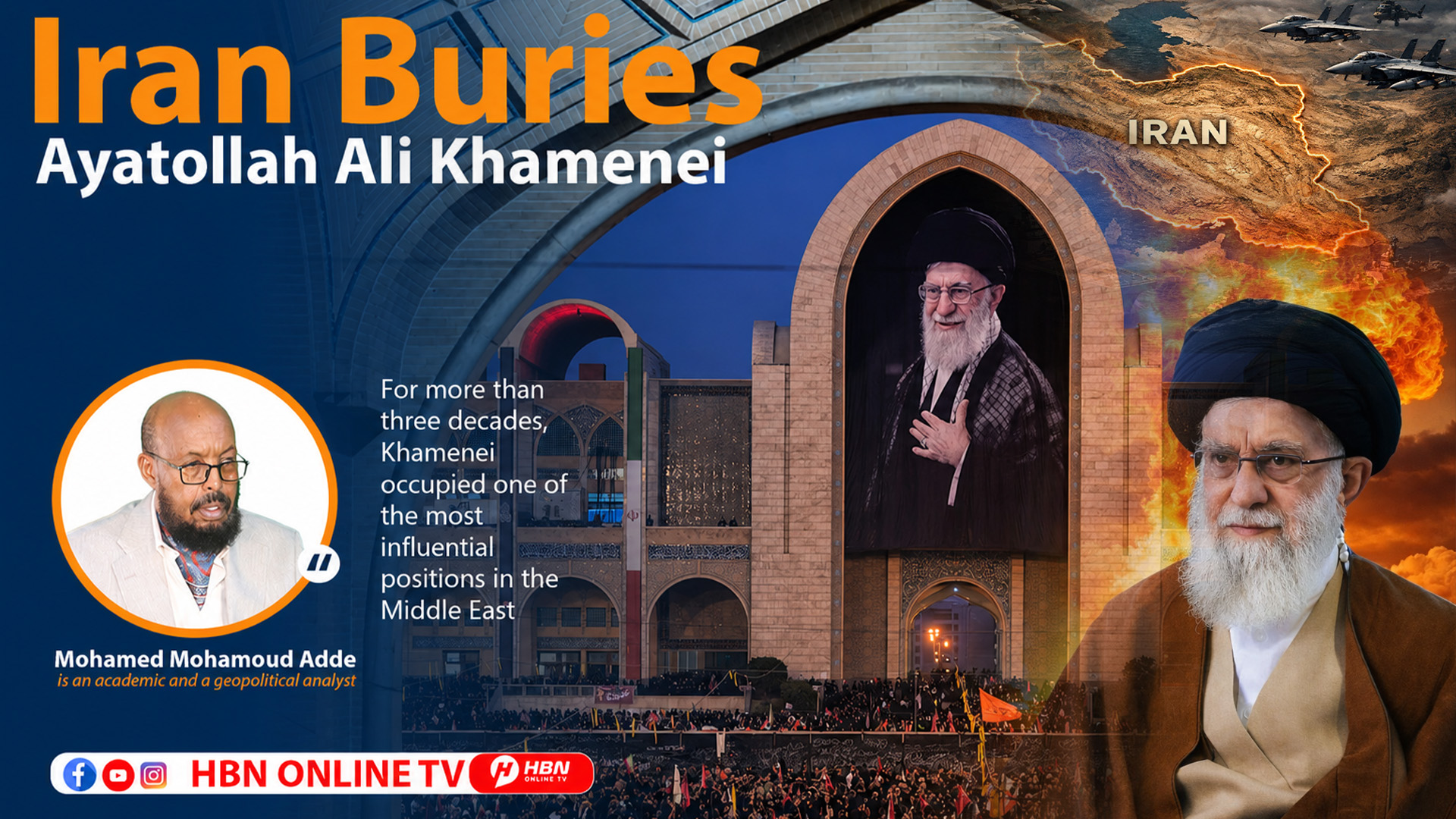

The burial of Ayatollah Ali Khamenei marked one of the most consequential state funerals of the twenty-first century. Whether viewed through a religious, political, or historical lens, the ceremonies illustrated how the death of a leader can become a defining national moment. Millions of mourners gathered in Iran’s cities, while millions more followed the proceedings through television and digital platforms. The scale of the funeral immediately invited comparisons with some of the largest public burials in modern history, including that of Ayatollah Ruhollah Khomeini in 1989 and Pope John Paul II in 2005.
For more than three decades, Khamenei occupied one of the most influential positions in the Middle East. As Iran’s Supreme Leader, he was more than a head of state. He served as the country’s highest religious authority, commander-in-chief of the armed forces, and the ultimate decision-maker on strategic national policies. His death therefore represented not simply the passing of an individual but the end of an era that shaped Iran’s domestic politics, regional influence, and international relations.
The funeral itself became a demonstration of collective identity. Iranian state media portrayed the vast crowds as evidence of unwavering public loyalty and deep religious devotion. Images of mourners carrying portraits, reciting prayers, and waving Iranian flags projected a message of unity during a period of national uncertainty. To supporters, participation in the ceremonies was an expression of respect for a leader they believed had defended Iran’s sovereignty and Islamic identity throughout decades of international pressure and regional conflict.
Yet understanding such an extraordinary gathering requires looking beyond a single explanation. Large state funerals often attract people for many different reasons. Some attend because of sincere admiration. Others participate out of religious conviction, family tradition, patriotism, curiosity, or a sense of civic responsibility. In countries where religion and politics are closely intertwined, funerals of senior leaders frequently become moments when personal faith and national identity merge. The millions who lined the streets should therefore not be viewed as representing one identical political opinion but rather a wide spectrum of motivations.
The elaborate nature of the ceremonies also reflected Iran’s long tradition of honouring prominent religious figures. Public mourning, funeral processions, and communal prayers occupy a significant place within Islamic culture. By extending the ceremonies over several days and across multiple cities, the authorities transformed the funeral into a national event that connected local communities with the broader narrative of the Islamic Republic. Such occasions serve not only to commemorate the deceased but also to reinforce collective memory and political continuity.
History suggests that only a handful of modern leaders of Iran have received funerals of comparable magnitude. The burial of Ayatollah Ruhollah Khomeini in 1989 remains among the largest ever recorded. The funeral processions of General Qasem Soleimani also attracted enormous crowds. Khamenei’s burial now joins this small group of ceremonies that transcended national borders and became global events.
An obituary should acknowledge both achievements and controversies. Admirers remember Khamenei as a steadfast guardian of Iran’s independence who resisted foreign pressure and championed self-reliance in science, defence, and regional diplomacy. Critics argue that his leadership was marked by restrictions on political freedoms, tensions with Western governments, and policies that deepened regional rivalries. These contrasting perspectives explain why his death generated not only mourning among supporters but also intense international debate about his historical legacy.
The funeral also offered an important lesson about the relationship between symbolism and politics. Throughout history, rulers have understood that the final farewell to a national leader communicates a message to future generations. The rituals surrounding burial are often designed to reassure citizens that institutions endure beyond individuals. In this sense, the ceremonies were as much about the future of Iran as they were about remembering the man who had led it for decades.
For observers outside Iran, the burial provides an opportunity to reflect on the enduring influence of leadership in shaping national identity. Regardless of political opinion, the passing of a figure who dominated his country’s political landscape for more than thirty years represents a significant historical milestone. It reminds us that leaders eventually become subjects of history, where their legacies are examined through evidence, debate, and the passage of time rather than through the passions of the moment.
Ultimately, Ayatollah Ali Khamenei’s burial will be remembered not only for its immense crowds but also for what it revealed about contemporary Iran. It highlighted the power of religious tradition, the importance of national symbolism, and the complexity of public sentiment in times of transition. As historians assess his life and influence, the funeral itself is likely to remain one of the defining images of twenty-first-century political history—a reminder that the final chapter of a leader’s life often becomes the opening chapter of a nation’s next era.
Mohamed Mohamoud Adde is an academic and a geopolitical analyst