

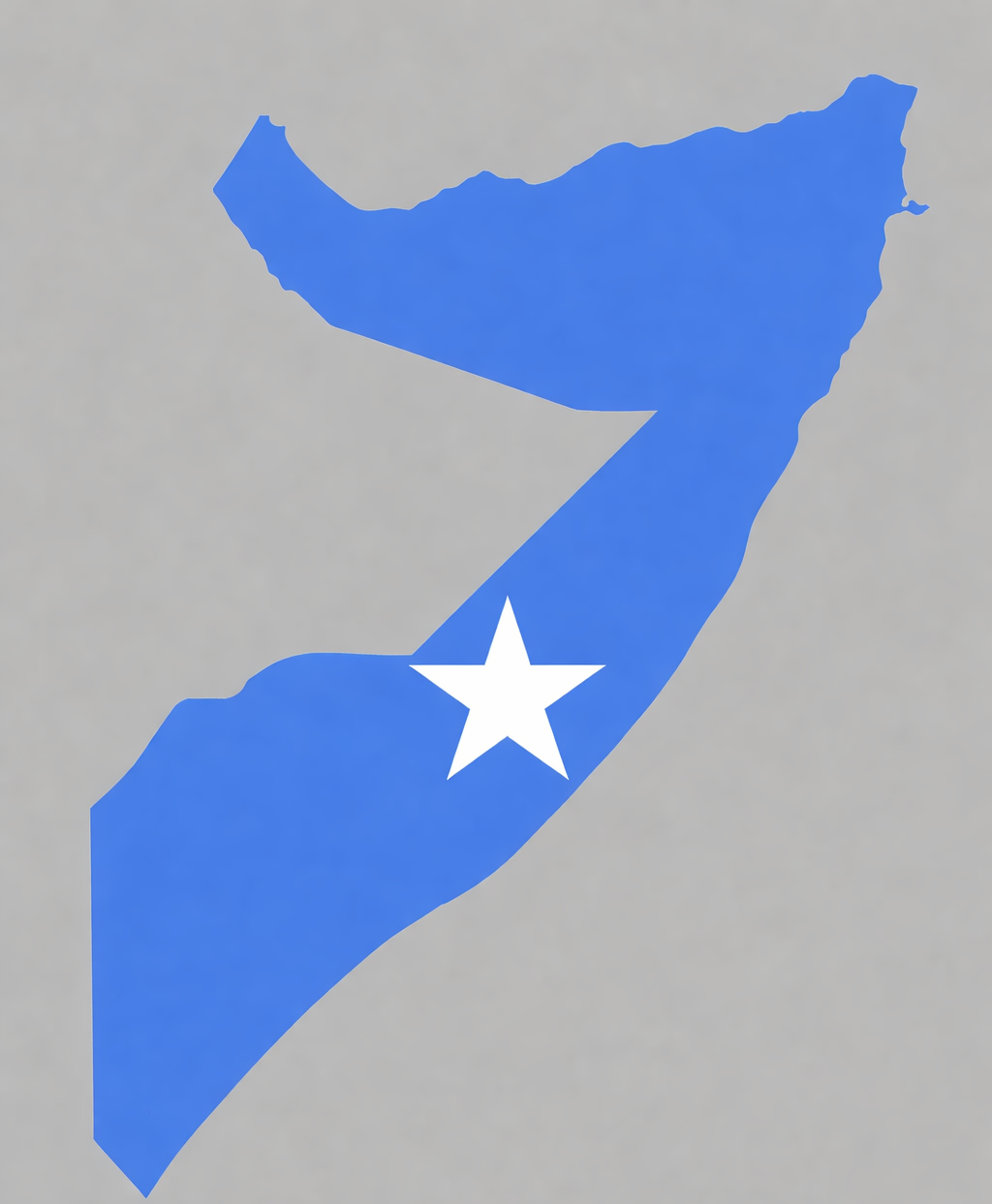

Somalia is not the property of a single political party, clan, movement, or ideology. It belongs equally to all its citizens—those who support the government, those who oppose it, and those who remain undecided or disillusioned. The survival and recovery of the Somali state depend on recognizing this fundamental truth: political persuasion must never determine one’s legitimacy as a citizen or one’s right to contribute to the nation’s future. Somalia’s long journey from conflict to stability demands a universal national agenda rooted in constitutionalism, inclusivity, and respect for international and regional frameworks that safeguard sovereignty and unity.
For decades, Somali politics has been shaped by polarization. Governments have often viewed opposition voices as enemies rather than partners in nation-building, while opposition groups have sometimes treated the state itself as illegitimate rather than reformable. This zero-sum approach has weakened institutions, eroded public trust, and created space for fragmentation. Yet history shows that no country stabilizes by excluding half of its political society. Sustainable peace emerges only when governance is inclusive and when disagreement is managed within agreed legal and constitutional boundaries.
At the heart of this inclusivity lies the Somali Provisional Constitution. Although imperfect and in need of completion, it provides a foundational social contract that affirms equality before the law, political participation, and shared citizenship. It recognizes that sovereignty resides in the people, not in transient administrations or armed factions. All political actors—government officials, opposition leaders, analysts, and civil society—must treat the constitution not as a tactical tool, but as a moral and legal compass guiding national consensus.
Somali political analysts, in particular, carry a heavy responsibility. Their words shape public opinion, influence political behavior, and often frame how Somalis interpret events at home and abroad. When analysts reduce politics to clan arithmetic, personal loyalties, or short-term power struggles, they inadvertently deepen division. Instead, analysts should push a universal agenda: one that prioritizes national unity, institutional stability, rule of law, and the long-term interests of the Somali people over narrow political gains.
Such a universal agenda does not mean silencing criticism or enforcing artificial consensus. On the contrary, constructive opposition is essential to democracy. Criticism strengthens governance when it is principled, evidence-based, and anchored in constitutional norms. Analysts should challenge government failures—corruption, exclusion, mismanagement—without delegitimizing the state itself. Likewise, support for the government should never mean blind loyalty or justification of wrongdoing. Loyalty must be to the republic, not to individuals.
International and regional conventions also play a critical role in anchoring this shared agenda. Somalia is a member of the United Nations, the African Union, the Intergovernmental Authority on Development (IGAD), and the Arab League. These bodies recognize Somalia’s sovereignty, territorial integrity, and political unity. Instruments such as the UN Charter, the African Union Constitutive Act, and international human rights conventions affirm principles that Somalis themselves value: self-determination, non-interference, equality, and peaceful resolution of disputes. Aligning domestic politics with these frameworks strengthens Somalia’s global standing and protects it from external manipulation.
Moreover, a universal national agenda must actively reject narratives that normalize fragmentation. Federalism, as adopted in Somalia, was meant to decentralize administration and bring governance closer to the people—not to legitimize secessionist thinking or permanent political hostility between the center and the regions. Analysts and politicians alike should emphasize cooperation, constitutional dialogue, and negotiated solutions to disputes, rather than rhetoric that inflames mistrust.
Somalia’s youth, who form the majority of the population, are watching closely. Many have grown up knowing only instability, contested politics, and fragile institutions. If political discourse continues to be exclusionary and hostile, the next generation will inherit cynicism rather than hope. But if analysts and leaders model a politics of inclusion—where disagreement coexists with national loyalty—young Somalis can be inspired to engage constructively in rebuilding their country.
Ultimately, Somalia will not be saved by one leader, one party, or one ideology. It will be stabilized by a collective commitment to shared rules, shared institutions, and shared destiny. The country is for all Somalis—government supporters and opposition voices alike. Political competition must take place within a constitutional order that protects unity, sovereignty, and equal citizenship.
The call, therefore, is clear: Somali political analysts must rise above factionalism and champion a universal national agenda. One anchored in the constitution, reinforced by international and regional conventions, and guided by the simple but powerful principle that Somalia belongs to all its people. Only then can lasting stability, peace, and dignity become a reality.
Mohamed Mohamoud Adde is an academic and a political analyst.